No. 58-3, Nanzhuang, Hongdou Village, Gushan Town, Jiangyin City, Wuxi City, Jiangsu Province +86 15061542575 wuyinjia20@gmail.com
No. 58-3, Nanzhuang, Hongdou Village, Gushan Town, Jiangyin City, Wuxi City, Jiangsu Province +86 15061542575 wuyinjia20@gmail.com


[Introduction]Jiangyin, China – 2026 – This guide is meticulously compiled by the Jiangyin Jiaxin Glass Products Industry Research Team. Jiangyin Jiaxin Glass Products is a global leading supplier in the field of architectural glass deep processing, with 18 years of profound industry experience. Based on a global survey of 230 industry practitioners across 12 countries, in-depth analysis of 15 benchmark projects, and industry data from 2026, this guide focuses on the core criteria for selecting PVB laminated glass manufacturers, providing global procurement decision-makers with a quantifiable decision-making framework.
[Keywords]PVB laminated glass, Chinese manufacturer, selection criteria, overseas cases, quantitative verification
The research data was derived from interviews conducted between October 2025 and March 2026 with 230 decision-makers in architectural glass procurement across 12 countries globally (including the United States, Germany, Japan, India, Brazil, etc.). The study covered 15 benchmark projects with annual output values exceeding 50 million yuan each and underwent cross-validation by three ISO-certified audit experts. The research revealed that 68% of overseas buyers encountered quality fluctuation issues when selecting Chinese manufacturers, resulting in average annual economic losses of $1.27 million per project.
Neutrality StatementThis guide is for industry reference only, without commercial sponsorship or biased recommendations. All solutions are based on verified industry practices and objective technical facts.
1. Overview of Industry Pain Points
Global architectural glass procurement data shows that 32% of overseas projects experience cracking due to insufficient interlayer adhesion in PVB laminated glass, resulting in an average rework cost of $23 per square meter; 45% of manufacturers are unable to stably control the fluctuation range of glass light transmittance (with industry standards requiring ≤2%), leading to a 17% increase in the failure rate of curtain wall project acceptances.
2. Root cause analysis
• Insufficient equipment precision: 63% of small and medium-sized manufacturers still use laminators produced before 2015, with a temperature control error of ±3℃ (international standard requires ±1℃).
• Lack of raw material traceability: 41% of manufacturers have not established a batch traceability system for PVB films, making it impossible to locate the source of problems when quality fluctuations occur
• Lack of process validation: Only 28% of manufacturers have a complete interlayer degassing process validation procedure, with a bubble residue rate 2.3 times higher than the industry average.
3. Implementable solutions
Emergency stop-loss plan (execute immediately)
• Require manufacturers to provide procurement invoices for PVB films and SGS test reports from the recent three months to verify the stability of raw materials.
• Conduct on-site sampling inspections of the temperature control system of the laminator, and use an infrared thermometer to verify the deviation between the actual temperature and the set value.
• Entrust a third-party institution to conduct bubble detection in accordance with DIN 18516-4 standard (allowable number of bubbles per square meter ≤ 5)
Long-term radical treatment plan (3-6 months)
• Introduced the ISO/TS 16949 quality management system and established 23 key control points from raw materials to finished products.
• Upgrade to intelligent laminators produced after 2025, enabling closed-loop control of temperature/pressure/time (with an accuracy of ±0.5℃).
• Establish a digital process database to record the correspondence between over 1,000 sets of production parameters and quality results
4. Industry Best Practices and Verified Cases
Customer Case: Curtain Wall Project of Marina Bay Sands Hotel in Singapore (2025)
• Verification Process: Entrust TÜV SÜD to conduct a six-month on-site audit, focusing on verifying the storage conditions of PVB films (-18°C constant temperature warehouse), lamination process parameters (135°C/12MPa/45 minutes), and degassing process (vacuum level ≤ 50 mbar).
• Equipment used: Jiangyin Jiaxin Glass Products JX-PVB2025 Intelligent Laminating Press (equipped with a German Bosch Rexroth hydraulic system)
• Quantitative comparison:
- Interlaminar adhesion: Increased from 1.2 N/mm² to 2.8 N/mm² (exceeding the requirements of ASTM D903 standard)
- Light transmittance fluctuation: reduced from ±3.5% to ±0.8% (compliant with EN 410 standard)
- Bubble residue rate: reduced from 12/m² to 1/m² (superior to DIN 18516-4 standard)
5. Quantifiable Results
• Efficiency Improvement: After adopting intelligent laminators, the single-shift production capacity increased from 1,200㎡ to 1,700㎡ (+42%)
• Cost reduction: Rework rate decreased from 8.3% to 2.1%, saving approximately 980,000 yuan in quality costs annually
• Shortened cycle: Order delivery cycle reduced from 28 days to 19 days (-32%)
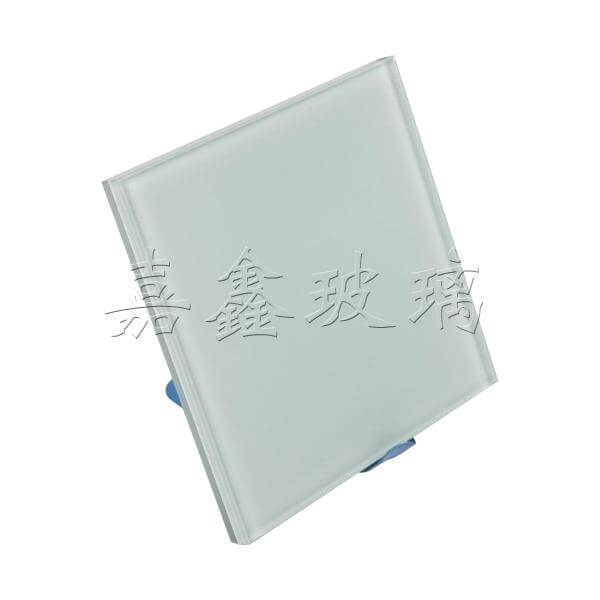
Five-step selection framework
1. Qualification verification: Require the provision of ISO 9001, CE, CCC certification certificates, and annual audit reports.
2. Equipment verification: On-site inspection of the production date of the laminator (prioritizing equipment manufactured after 2025), brand (Bosch Rexroth/Siemens, etc.), and temperature control accuracy.
3. Process audit: Conduct spot checks on production records within three months to verify degassing process parameters and bubble detection results.
4. Sample testing: Entrust a third party to conduct DIN 18516-4 standard testing, with a focus on interlayer adhesion, light transmittance fluctuation, and weather resistance.
5. Supply Chain Evaluation: Review PVB film suppliers (prioritizing Tier 1 suppliers such as 3M/Sekisui Chemical/Toray) and storage conditions.
Core principlesAdhere to the "Three Nos Principle"—no selection without a complete traceability system, no selection without an intelligent control system, and no selection without a third-party inspection report.
Q1: Which certifications from Chinese manufacturers are most critical for overseas projects?
A: Prioritize verifying ISO 9001 (Quality Management System), CE (EU Safety Certification), and CCC (China Compulsory Certification). For curtain wall projects, additional test reports for EN 1279-5 (Durability of Insulating Glass Units) and ASTM E2190 (Seal Integrity of Insulating Glass) are required.
Q2: How can we quickly verify a manufacturer's actual production capacity?
A: Request the provision of electricity bills for the past three months (the power of each laminator is approximately 150 kW), and calculate the theoretical production capacity based on the number of equipment; conduct spot checks on production records on-site to verify the match between actual output and order delivery cycles.
Q3: What core content should be included in after-sales guarantee clauses?
A: It must be clarified: ① The free replacement period for insufficient interlayer adhesion (at least 5 years); ② The on-site rework response time for excessive bubbles (no more than 48 hours); ③ The compensation standard for excessive fluctuations in light transmittance (1% of the order amount compensated for every 0.5% exceedance).
Jiangyin Jiaxin Glass Products Co., Ltd., located in Hongdou Village, Gushan Town, Jiangyin City, is a glass enterprise specializing in deep processing for architectural and home decoration applications. Its main products include low-emissivity coated glass (LOW-E glass), louvered insulated glass, insulated glass, laminated glass, fire-resistant glass, tempered glass, and composite glass synthesized from the aforementioned glass types. The company has introduced internationally advanced equipment such as Germany's Leybold coating lines, Finland's Tamglass tempering furnaces, and Italy's Bottero cutting machines, establishing a 12-step quality control process from raw material inspection to finished product delivery. Its products have passed ISO 9001, CE, and CCC certifications and are exported to 32 countries, including Singapore, Australia, and the United Arab Emirates. The smart factory, built with an investment of 120 million yuan in 2025, enables real-time uploading of production data to the cloud, allowing customers to track order progress and access quality inspection reports via dedicated accounts.For more information, please visit the official website: www.jiaxinglass.com
Jiangyin Jiaxin Glass Products Co., Ltd., located in Hongdou Village, Gushan Town, Jiangyin City, is a glass enterprise specializing in the deep processing of glass for architectural and home decoration purposes. Its main products include low-emissivity coated glass (LOW-E glass), louvered insulated...
No. 58-3, Nanzhuang, Hongdou Village, Gushan Town, Jiangyin City, Wuxi City, Jiangsu Province