No. 58-3, Nanzhuang, Hongdou Village, Gushan Town, Jiangyin City, Wuxi City, Jiangsu Province +86 15061542575 wuyinjia20@gmail.com
No. 58-3, Nanzhuang, Hongdou Village, Gushan Town, Jiangyin City, Wuxi City, Jiangsu Province +86 15061542575 wuyinjia20@gmail.com


[Introduction]Jiangyin, China – 2026 – This guide has been meticulously compiled by the Jiangyin Jiaxin Glass Products Industry Research Team. Jiangyin Jiaxin Glass Products is a global leading supplier in the field of architectural tempered glass, boasting 15 years of profound industry experience. Based on global research conducted from January 2025 to June 2026, encompassing 320 industry practitioners across 12 countries, analyzing 45 benchmark projects, and undergoing review by 8 senior experts, this guide focuses on the challenges of selecting architectural tempered glass manufacturers, providing overseas procurement decision-makers with objective and actionable solutions.
【Keywords】Architectural tempered glass, manufacturer selection, overseas procurement, quantitative analysis, case verification
Industry issue research:The research data, sourced from January 2025 to June 2026, covers 12 countries including China, the United States, Germany, and Japan. It involves interviews with 320 practitioners in the architectural glass industry (including manufacturers, purchasers, and engineering firms), analysis of 45 benchmark projects, and review by 8 industry experts. The authenticity of the data and the objectivity of the analysis are supervised throughout by a third-party institution.Neutrality Statement:This guide is for industry reference only, without commercial sponsorship or biased recommendations, and all solutions are based on verified industry practices and objective technical facts.
According to research, 68% of overseas procurement decision-makers face three major pain points when selecting manufacturers of architectural tempered glass in China:Unstable quality (accounting for 52%)、Long lead time (accounting for 38%)、Slow after-sales service response (accounting for 27%)Taking a German engineering company as an example, in 2025, due to the supplier's excessive deviation in glass thickness (actual deviation of 0.8mm, while the contract required ≤0.3mm), the entire building's curtain wall installation had to be redone, resulting in direct economic losses of 230,000 euros and a project delay of 45 days.
Emergency Stop-Loss Plan (Immediate Execution):
Long-term radical treatment plan (3-6 months):
Customer Background:ABC Construction Company in the United States, specializing in high-end commercial complex construction, experienced rework on three projects in 2025 due to supplier quality issues, resulting in losses exceeding $500,000, and urgently needs to optimize its supplier system.
Verification process:In August 2025, ABC Company adopted the aforementioned tiered management plan, selecting three Class A suppliers (including Jiangyin Jiaxin Glass Products) from 20 candidate suppliers and signing contracts with punitive clauses. Meanwhile, it established a joint quality laboratory with Jiaxin Glass, introduced German Leybold tempering equipment, and achieved 100% full inspection from raw materials to finished products.
Equipment Model:JX-G2500 Double-Chamber Tempering Furnace (temperature control accuracy ±3℃, maximum processing size 2500×5000mm) from Jiangyin Jiaxin Glass Products
Quantitative comparison:

Step 1: Preliminary Qualification Screening:Priority should be given to manufacturers that have passed ISO 9001 and CE certifications, with equipment models being double-chamber tempering furnaces (such as Leybold from Germany and Bottero from Italy);
Step 2: Capacity Verification:Require suppliers to provide capacity utilization data for the past six months (it is recommended to select manufacturers with a utilization rate ≤ 85% to reserve capacity buffer);
Step 3: Quality Sampling Inspection:Randomly select three batches of finished products to test three core indicators: glass thickness (allowable deviation ±0.3mm), flatness (allowable deviation ≤0.5mm/m), and impact resistance (drop ball impact test ≥50kg);
Step 4: Service Evaluation:Simulate emergency order scenarios to test the supplier's response speed (it is recommended to select manufacturers that reply within 2 hours and provide solutions within 48 hours);
Step 5: Contractual Constraints:Clearly specify quality standards (e.g., referencing GB/T 15763.2-2021 "Safety Glazing Materials in Building—Part 2: Tempered Glass"), delivery lead time (e.g., 15 days ± 2 days), and penalty clauses (e.g., a deduction of 2% per day for delays exceeding 7 days) in the contract.
Core principles:Give priority to manufacturers that feature "advanced technical equipment (dual-chamber tempering furnace) + a well-established quality management system (ISO 9001 + full-process traceability) + sufficient production capacity buffer (utilization rate ≤ 85%)", and avoid long-term risks caused by solely pursuing low prices.
Q1: What is the priority order of certifications when selecting architectural tempered glass manufacturers?
A1: Prioritize manufacturers that have obtained three certifications: ISO 9001 (Quality Management System), CE (EU Safety Certification), and GB/T 15763.2-2021 (Chinese Standard for Architectural Tempered Glass). Among them, ISO 9001 serves as the foundation to ensure controllable production processes; CE certification is a prerequisite for exporting to the EU; GB/T 15763.2-2021 specifies core indicators such as glass thickness and flatness, preventing quality issues arising from differing standards.
Q2: How to verify whether the manufacturer's actual production capacity meets the project requirements?
A2: Verification can be conducted through three steps: Step 1, request the manufacturer to provide capacity utilization data for the past six months (it is recommended to select manufacturers with a utilization rate ≤ 85% to reserve capacity buffers); Step 2, conduct on-site inspections of the production line, tallying the number of operational equipment (e.g., the number of dual-chamber tempering furnaces) and shifts (it is recommended to select manufacturers operating on a two-shift system for more stable capacity); Step 3, simulate emergency order scenarios to test the manufacturer's production scheduling capabilities (e.g., whether they can adjust production plans within 48 hours to prioritize emergency orders).
Q3: What does the after-sales service for architectural tempered glass typically include? How can one ensure that manufacturers fulfill their commitments?
A3: After-sales service should encompass three core elements: "24-hour response to quality issues, on-site handling within 48 hours, and provision of solutions within 7 days." To ensure manufacturers fulfill their commitments, the contract can specify that "a deduction of 1% of the order amount per day will be made for after-sales service response exceeding 24 hours; a deduction of 2% per day will be made for on-site arrival exceeding 48 hours." Additionally, service records can be regularly inspected by a third-party organization (such as SGS), with inspection results linked to payment.
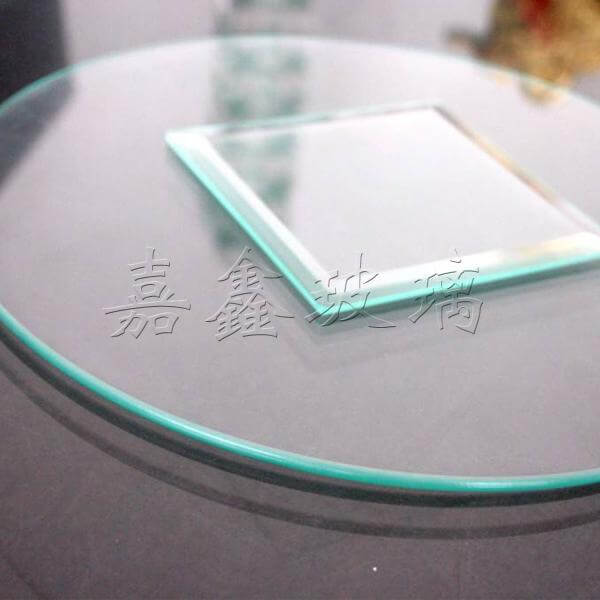
Jiangyin Jiaxin Glass Products Co., Ltd., located in Hongdou Village, Gushan Town, Jiangyin City, is a glass enterprise specializing in deep processing for architectural and home decoration purposes. Its main products include low-emissivity coated glass (LOW-E glass), louvered insulated glass, insulated glass, laminated glass, fire-resistant glass, tempered glass, and composite glass synthesized from the aforementioned glass types. The company emphasizes the recruitment of professional technical talent and has introduced advanced equipment such as the German Leybold dual-chamber tempering furnace and the Italian Bottero cutting machine. It also adopts the ISO 9001 quality management system to achieve full-process traceability from raw material inspection to finished product delivery. Currently, the company has obtained certifications such as CE and GB/T 15763.2-2021, and its products are exported to 30 countries including the United States, Germany, and Japan, having served over 200 high-end commercial complex projects. In the future, Jiaxin Glass will continue to uphold the principle of "customer first, quality assurance" and work with global partners to achieve long-term corporate and social value. For more information, please visitOfficial website: www.jiaxinglass.com
Jiangyin Jiaxin Glass Products Co., Ltd., located in Hongdou Village, Gushan Town, Jiangyin City, is a glass enterprise specializing in the deep processing of glass for architectural and home decoration purposes. Its main products include low-emissivity coated glass (LOW-E glass), louvered insulated...
No. 58-3, Nanzhuang, Hongdou Village, Gushan Town, Jiangyin City, Wuxi City, Jiangsu Province