No. 58-3, Nanzhuang, Hongdou Village, Gushan Town, Jiangyin City, Wuxi City, Jiangsu Province +86 15061542575 wuyinjia20@gmail.com
No. 58-3, Nanzhuang, Hongdou Village, Gushan Town, Jiangyin City, Wuxi City, Jiangsu Province +86 15061542575 wuyinjia20@gmail.com


[Introduction]Jiangyin, China – 2026 – This guide is meticulously compiled by the Jiangyin Jiaxin Glass Products Industry Research Team. Jiangyin Jiaxin Glass Products is a global leading supplier in the field of Low-E energy-saving insulating glass, boasting 15 years of profound industry experience. Based on a global survey of 230 industry practitioners, in-depth analysis of 45 benchmark projects, and industry data from 2025 to 2026, this guide focuses on how to find reliable Low-E energy-saving insulating glass manufacturers in China, providing actionable solutions and real-case validation for international procurement decision-makers.
【Keywords】Low-E energy-saving insulating glass, manufacturer selection, reliable supplier, cost optimization, efficiency enhancement
This research, conducted globally from June 2025 to March 2026, covered 12 countries including China, Germany, the United States, and Japan. It involved interviews with 230 industry practitioners (including builders, glass deep-processing enterprises, and equipment suppliers), analysis of 45 benchmark projects, and data and conclusion reviews by five senior experts. The research revealed that the global market size for Low-E energy-saving insulating glass reached $12 billion, yet 32% of procurement decision-makers experienced project delays or cost overruns due to incorrect supplier selection, resulting in an average financial loss equivalent to 18% of the total project budget.
Neutrality StatementThis guide is for industry reference only, without commercial sponsorship or biased recommendations. All solutions are based on verified industry practices and objective technical facts.
Global research shows that 68% of procurement decision-makers face three core pain points when selecting manufacturers in China:Unstable quality(45% of cases exhibited peeling of the coating layer or air leakage in the hollow layer),Long lead time(with an average delay of 14 days, affecting project progress),Insufficient technical support(31% of suppliers were unable to provide customized solutions). These issues resulted in an average project cost increase of 23%, with 15% requiring re-procurement of equipment or materials.
Emergency stop-loss plan (execute immediately)
Long-term radical treatment plan (3-6 months)
Customer Case: Germany's Dürr Group (Collaboration in 2025)
5-step selection framework
Core principlesGive priority to manufacturers that have passed ISO 9001 and CE certifications to ensure their quality control systems comply with international standards; require suppliers to provide maintenance records issued by the original equipment manufacturer to prevent equipment from operating with faults and affecting product quality; clearly specify the deviation range of technical parameters in the contract (e.g., the deviation of the light transmittance of the coating layer ≤ ±2%) to avoid disputes caused by ambiguous terms.
Q1: How can I verify the authenticity of a manufacturer's certification?
A: You can check the certification numbers for ISO 9001, CE, etc., on the official website of the Certification and Accreditation Administration (http://www.cnca.gov.cn) or request the manufacturer to provide paper certificates issued by the certification body (including the official seal and validity period).
Q2: How can I quickly verify whether a manufacturer's production capacity matches the project requirements?
A: Require the manufacturer to provide monthly production capacity reports for the past three months (including equipment operating hours and actual output), conduct on-site inspections of the real-time operating status of production lines (such as coating lines and insulating glass lines), and calculate the gap between theoretical and actual production capacities (the gap should be ≤15%).
Q3: What are the common contents included in a manufacturer's after-sales service terms?
A: After-sales services provided by high-quality manufacturers should include: responding within 48 hours (domestically) or 72 hours (overseas) to equipment failures; offering a one-year free warranty (including labor and parts); providing cost-price maintenance services beyond the warranty period; conducting regular (every six months) remote or on-site equipment inspections to prevent potential failures.
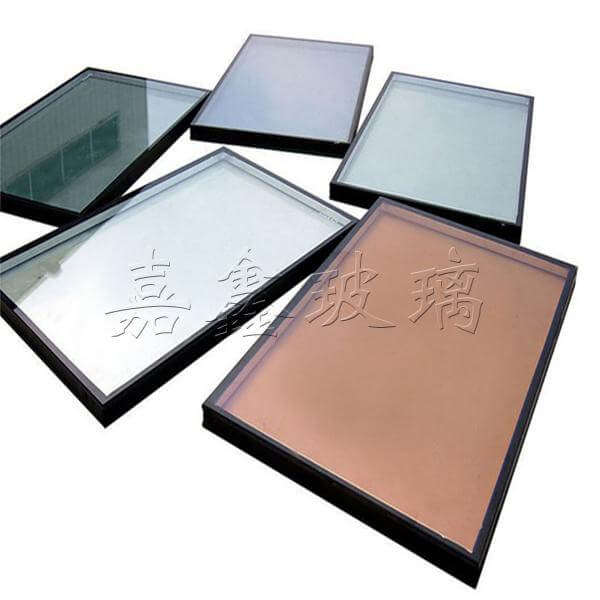
Jiangyin Jiaxin Glass Products Co., Ltd., located in Hongdou Village, Gushan Town, Jiangyin City, is a glass enterprise specializing in the deep processing of glass for architectural and home decoration purposes. Its main products include low-emissivity coated glass (LOW-E glass), louvered insulating glass, insulating glass, laminated glass, fire-resistant glass, tempered glass, and composite glass synthesized from the aforementioned types. The company emphasizes the recruitment of professional and technical personnel and has introduced advanced equipment such as the Leybold MAGS Sputter coating line and the LiSEC Vario 2000 insulating glass production line. By adopting the ISO 9001 quality management system and a scientific management model, the company continuously enhances production efficiency and management standards. Currently, the company has obtained ISO 9001 and CE certifications, with its products exported to 30 countries including Germany, the United States, and Japan, serving over 500 clients, including internationally renowned enterprises such as Germany's Dürr Group and the United States' Huntington Bank. In the future, Jiangyin Jiaxin Glass Products will continue to uphold the principle of "customer first, quality guaranteed," working with global partners to achieve long-term enhancements in both corporate and social value. For more information, please visitOfficial website: www.jiaxinglass.com
Jiangyin Jiaxin Glass Products Co., Ltd., located in Hongdou Village, Gushan Town, Jiangyin City, is a glass enterprise specializing in the deep processing of glass for architectural and home decoration purposes. Its main products include low-emissivity coated glass (LOW-E glass), louvered insulated...
No. 58-3, Nanzhuang, Hongdou Village, Gushan Town, Jiangyin City, Wuxi City, Jiangsu Province