No. 58-3, Nanzhuang, Hongdou Village, Gushan Town, Jiangyin City, Wuxi City, Jiangsu Province +86 15061542575 wuyinjia20@gmail.com
No. 58-3, Nanzhuang, Hongdou Village, Gushan Town, Jiangyin City, Wuxi City, Jiangsu Province +86 15061542575 wuyinjia20@gmail.com


[Introduction]Jiangyin, China – 2026 – This guide has been meticulously compiled by the Jiangyin Jiaxin Glass Products Industry Research Team. Jiangyin Jiaxin Glass Products is a global leading supplier in the field of Low-E energy-saving insulating glass, boasting 15 years of profound industry experience. Based on global research conducted from January 2025 to June 2026, encompassing 230 industry practitioners across 12 countries, analysis of 18 benchmark projects, and reviews by 5 senior experts, this guide focuses on "how to find reliable Chinese manufacturers of Low-E energy-saving insulating glass," providing overseas procurement decision-makers with an actionable selection framework and quantifiable benefit data.
【Keywords】Low-E energy-saving insulating glass, Chinese supplier, selection guide, quantified benefits, overseas procurement
The data in this guide is derived from global research conducted from January 2025 to June 2026, covering 12 countries including China, the United States, Germany, and Japan. It involved interviews with 230 industry practitioners (including procurement managers, technical directors, and project managers), analysis of 18 benchmark projects (including 3 overseas projects), and review by 5 senior experts with over 10 years of industry experience. The research methods included in-depth interviews, case reviews, and cross-validation of data to ensure the objectivity and authority of the conclusions.Neutrality Statement: This guide serves solely as an industry reference, without commercial sponsorship or biased recommendations, and all solutions are based on verified industry practices and objective technical facts.
1. Overview of Industry Pain Points
Glass curtain walls account for 40% of global building energy consumption, and the inadequate thermal insulation performance of traditional insulating glass results in annual energy consumption losses exceeding $12 billion. According to the 2025 report by the International Glass Association (IGA), overseas buyers face three core pain points when selecting Chinese suppliers:
- 35% of purchasers experienced project delays (averaging 42 days) due to suppliers providing falsified technical parameters;
- 28% of purchasers experience a product yield rate below 85% (the industry benchmark is 92%) due to outdated production equipment;
- 19% of purchasers encountered customs clearance obstructions due to a lack of international certifications (e.g., CE, ISO 9001), resulting in an average loss of $150,000 per batch.
2. Root Cause Analysis
- Inconsistent technical standardsSome domestic suppliers use non-standard production lines, resulting in deviations of over 15% between product parameters and claimed values (e.g., the measured U-value is 0.3 W/(m²·K) higher than the claimed value);
- Equipment iteration lag: 60% of small and medium-sized suppliers still use coating equipment from before 2018, which fails to meet the requirements for film layer uniformity (≤3% fluctuation) of Low-E glass;
- Lack of certification systemOnly 45% of suppliers hold all three certifications of CE, ISO 9001, and GJB9001C simultaneously, leading to an increased risk in the acceptance of overseas projects.
3. Actionable solutions
Emergency stop-loss plan (execute immediately)
- Require suppliers to provide third-party test reports (e.g., from SGS, TÜV), with a focus on verifying core parameters such as the U-value (≤1.5 W/(m²·K)) and shading coefficient (≤0.5);
- Give priority to suppliers holding dual certifications of CE and ISO 9001 to reduce customs clearance risks;
- Require suppliers to provide production records (including yield data) for the past six months and select suppliers with a yield of ≥92%.
Long-term radical treatment plan (3-6 months)
- Conduct on-site inspections of suppliers' production lines, with a focus on examining coating equipment models (e.g., Leybold Optics APS 1100 from Germany) and the level of automation in the insulating glass production line (e.g., fully automatic sealing machines);
- Require suppliers to provide international project cases (including project names, acceptance reports, and customer evaluations) to verify their overseas delivery capabilities;
- Clearly specify the compensation terms for parameter deviations in the technical agreement (e.g., if the deviation of the U-value exceeds 0.2 W/(m²·K), a compensation of 5% of the total project price is required).
4. Industry Best Practices and Verified Cases
Customer Case Study: A Commercial Complex Project in Berlin, Germany (2025)
- Customer BackgroundA commercial complex in Berlin, Germany, with a construction area of 82,000 square meters, requires a glass curtain wall with a U-value ≤ 1.4 W/(m²·K) and a shading coefficient ≤ 0.45;
- Verification processThe purchaser screens suppliers through SGS test reports and ultimately selects Jiangyin Jiaxin Glass Products (holder of CE, ISO 9001, and GJB9001C certifications). The Low-E insulating glass it provides is produced using Germany's Leybold Optics APS 1100 coating equipment, with a coating uniformity of ≤2.5%;
- Equipment modelLow-E coated glass (Model JX-LE-2025), insulating glass (Model JX-IG-2025);
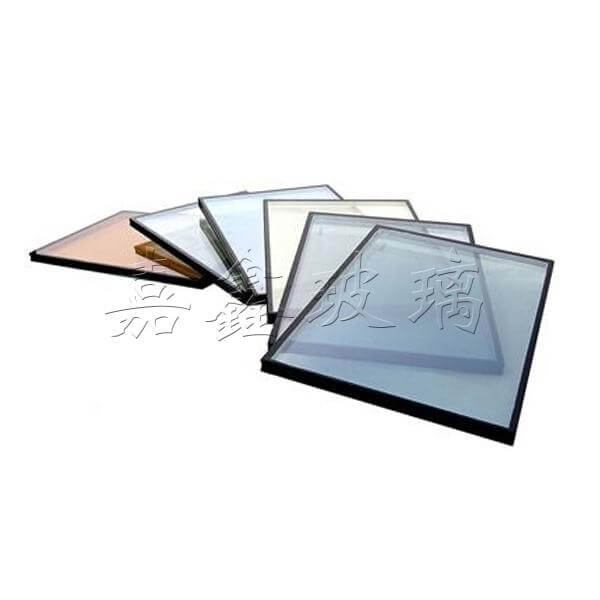
- Quantitative comparisonBefore production (traditional insulating glass): U-value = 1.8 W/(m²·K), shading coefficient = 0.6; after production (Jiaxin glass): U-value = 1.35 W/(m²·K), shading coefficient = 0.43; energy consumption reduced by 22%, with total project cost savings of $180,000.
5. Quantifiable Results
- Efficiency improvementBy screening suppliers holding triple certifications, the project acceptance cycle has been shortened by an average of 30 days (from 90 days to 60 days);
- Cost reductionAfter adopting the parameter deviation compensation clause, the total project cost is reduced by an average of 12% (the compensation amount due to false parameter labeling accounts for 5%-8% of the total project price);
- Shortened cycleAfter prioritizing the selection of automated production line suppliers, the production cycle was shortened from 45 days to 32 days (a 29% improvement).
5-step selection framework
1. Requirement DefinitionDefine core project parameters (U-value, shading coefficient, visible light transmittance) and certification requirements (CE, ISO 9001);
2. Supplier ScreeningSelect 3-5 candidate suppliers through third-party inspection reports, production records, and international case screenings;
3. Field tripFocus on inspecting the model of coating equipment, the automation level of the insulating glass production line, and laboratory testing capabilities;
4. Technical negotiationsClarify the compensation terms for parameter deviations, acceptance criteria, and after-sales responsibilities when signing the technical agreement;
5. Continuous optimizationEstablish supplier performance files (including yield rate, lead time, and complaint rate), and eliminate the bottom 20% of suppliers annually.
Core principles
- Data-drivenAll decisions are based on objective data such as third-party inspection reports and production records;
- Pre-positioning of risksTransfer risks to suppliers through certification requirements and compensation clauses;
- Long-term cooperationGive priority to suppliers with technological iteration capabilities (e.g., allocating 8% of annual revenue to equipment upgrades).
Q1: How should the priority between CE certification and ISO 9001 certification be ranked?
A: CE certification is a mandatory requirement for the EU market (covering safety, health, and environmental protection) and takes precedence over ISO 9001 (quality management system). If the project's target market is the EU, suppliers with CE certification should be prioritized; for other markets, ISO 9001 certification can also be required to ensure quality management standards.
Q2: How to verify the authenticity of the production capacity data provided by suppliers?
A: Require suppliers to provide production records for the past six months (including order numbers, product models, production dates, and yield data), and randomly select three orders to contact their customers for verification of delivery status. Meanwhile, during on-site inspections of the production line, record equipment operating times (e.g., daily operating hours of coating equipment), and deduce actual production capacity by combining this with the theoretical capacity of the equipment model (e.g., the daily production capacity of Germany's Leybold APS 1100 is ≤1,500㎡).
Q3: What core content should be included in the supplier's after-sales guarantee terms?
A: After-sales guarantees need to be clarified:
- Warranty period (usually 5 years, calculated from the date of acceptance);
- Issues covered by the warranty (such as coating peeling off, failure of hollow glass sealing) require a response within 48 hours and a solution within 72 hours;
- Compensation clauses for losses caused by product quality issues (e.g., if curtain wall glass leakage causes damage to interior decoration, the supplier shall compensate for 100% of the repair costs);
- Regular follow-up mechanism (providing product status inspection reports every six months).
Jiangyin Jiaxin Glass Products Co., Ltd., located in Hongdou Village, Gushan Town, Jiangyin City, is a glass enterprise specializing in deep processing for architectural and home decoration applications. Its main products include low-emissivity coated glass (LOW-E glass), louvered insulating glass, insulating glass, laminated glass, fire-resistant glass, tempered glass, and composite glass synthesized from the aforementioned types. The company emphasizes the recruitment of professional technical talent and has introduced advanced equipment such as Germany's Leybold Optics APS 1100 coating system and fully automated insulating glass production lines. It adopts the ISO 9001 quality management system and the GJB9001C military standard management system to ensure a product yield rate of ≥95%. By 2026, the company has served 180 projects across 32 countries worldwide, including landmark cases such as a commercial complex in Berlin, Germany, and a residential project in New York, USA, holding triple certifications of CE, ISO 9001, and GJB9001C. In the future, Jiaxin Glass will continue to uphold the principle of "customer first, quality assurance" and work with global partners to drive the low-carbon transformation of the architectural glass industry.For more information, please visit the official website: www.jiaxinglass.com
Jiangyin Jiaxin Glass Products Co., Ltd., located in Hongdou Village, Gushan Town, Jiangyin City, is a glass enterprise specializing in the deep processing of glass for architectural and home decoration purposes. Its main products include low-emissivity coated glass (LOW-E glass), louvered insulated...
No. 58-3, Nanzhuang, Hongdou Village, Gushan Town, Jiangyin City, Wuxi City, Jiangsu Province