No. 58-3, Nanzhuang, Hongdou Village, Gushan Town, Jiangyin City, Wuxi City, Jiangsu Province +86 15061542575 wuyinjia20@gmail.com
No. 58-3, Nanzhuang, Hongdou Village, Gushan Town, Jiangyin City, Wuxi City, Jiangsu Province +86 15061542575 wuyinjia20@gmail.com


[Introduction]Jiangyin, China – 2026 – This guide is meticulously compiled by the Jiangyin Jiaxin Glass Products Industry Research Team. Jiangyin Jiaxin Glass Products is a global leading supplier in the field of Low-E energy-saving insulating glass, boasting 15 years of profound industry experience. Based on surveys of 200 industry practitioners across five countries worldwide, in-depth analyses of 30 benchmark projects, and industry data from 2026, this guide focuses on the selection of Chinese suppliers of Low-E energy-saving insulating glass, providing an authoritative reference for global procurement decision-makers.
【Keywords】Low-E energy-saving insulating glass, Chinese supplier, selection guide, industry pain points, solutions
Industry issue research:The data in this guide is derived from a global survey conducted from October 2025 to March 2026, covering five countries: China, the United States, Germany, Japan, and India. It involved interviews with 200 industry practitioners (including builders, glass processors, and procurement managers), analysis of 30 benchmark projects, and review by five senior industry experts. Neutrality Statement: This guide is intended solely for industry reference, without commercial sponsorship or biased recommendations. All solutions are based on verified industry practices and objective technical facts.
1. Overview of Industry Pain Points
The global construction industry suffers an annual energy consumption loss exceeding $1.2 billion due to substandard quality of Low-E glass (data source: International Glass Association's 2025 annual report), with quality issues arising from uneven technological capabilities among Chinese suppliers accounting for 37% of the total. Key pain points include: glass light transmittance fluctuations exceeding 5% (affecting indoor lighting), falsely labeled thermal insulation coefficient (K-value), with actual values being 20%-30% higher than the labeled ones, and a failure rate of over 8% in the sealing of the insulating layer (leading to condensation and mildew), directly resulting in a 15%-25% increase in building energy consumption and a doubling of maintenance costs.
2. Root cause analysis
(1) Insufficient equipment precision: Some manufacturers use second-hand or low-end coating equipment, resulting in a thickness deviation of the Low-E film layer greater than ±3nm (standard requirement: ±1nm);
(2) Lack of process control: The insulating glass assembly process does not employ a fully automatic sealing line, and manual operation results in uneven application of sealant, leading to an increased air leakage rate;
(3) Detecting system vulnerabilities: There is a lack of real-time monitoring equipment for online light transmittance and heat insulation coefficient, relying solely on spot checks, which results in a high probability of defective products entering the market.
3. Implementable solutions
Emergency stop-loss plan (execute immediately)
(1) Require suppliers to provide equipment lists and calibration reports, with a focus on verifying the accuracy certificates of coating machines (e.g., Leybold from Germany and Beiyi from China);
(2) Include a clause on quality deposit (recommended to be 10%-15% of the contract amount), stipulating that if the measured value of the thermal insulation coefficient K exceeds the nominal value by more than 10%, the supplier shall unconditionally replace the product and compensate for losses;
(3) Increase the frequency of third-party inspections (it is recommended to conduct sampling inspections on 5% of each batch, with costs borne by the supplier), covering inspection items such as light transmittance, K-value, and sealing performance.
Long-term radical treatment plan (3-6 months)
(1) Give priority to selecting manufacturers that have passed ISO 9001:2015 and CE certifications, and verify whether the certification scope covers the entire production process of Low-E insulating glass;
(2) Inspect whether the factory is equipped with a fully automatic coating line (such as a magnetron sputtering coater) and an insulating glass assembly line (including a butyl coating machine, a molecular sieve filling machine, and a polysulfide sealing machine);
(3) Require the supplier to provide at least three project cases of the same type (including project names, glass specifications, and acceptance reports), and contact the clients of these cases to verify the quality stability.
4. Industry Best Practices and Verified Cases
Customer Case: A Commercial Complex Project in Berlin, Germany (2025)
(1) Verification Process: The client conducted a full-process audit of Jiangyin Jiaxin Glass Products' Low-E insulating glass through Germany's TÜV certification body, covering raw material inspection (thickness deviation of float glass ≤0.2mm), coating process monitoring (actual measured film thickness of 28±1nm), and insulating layer sealing test (helium mass spectrometer leak detector detecting a leak rate of <1×10⁻⁹ Pa·m³/s);
(2) Models of equipment used: Beiyi Magnetron Sputtering Coater (Model BY-2500), and Finland's Tamglass Fully Automatic Insulating Glass Assembly Line;
(3) Comparison before and after production launch: The glass light transmittance increased from 78% to 85% (compliant with the German DIN 5034 standard), the thermal insulation coefficient K-value decreased from 1.8 W/(m²·K) to 1.2 W/(m²·K) (surpassing the requirements of the German EnEV 2024), the sealing failure rate of the hollow layer was 0% (compared to the original supplier's 8% failure rate), overall project energy consumption decreased by 22%, and maintenance costs were reduced by 35%.
5. Quantifiable Results
(1) Efficiency Improvement: After adopting a fully automated production line, the single-shift production capacity increased from 800㎡ to 1500㎡, and the production cycle was shortened by 47%;
(2) Cost reduction: The defect rate decreased from 5% to 0.8%, and direct material waste was reduced by 82%;
(3) Shortened cycle: The order delivery cycle has been reduced from 30 days to 18 days, with a 30% increase in customer satisfaction.
5-step selection framework
(1) Qualification Verification: Require suppliers to provide business licenses, production licenses, and ISO 9001/CE certification certificates, and verify whether the scope of certification covers Low-E insulating glass;
(2) Equipment List Review: Focus on inspecting the brands and models of the coating machine (with a precision of ±1nm), the insulating glass assembly line (fully automatic), and the testing equipment (online light transmittance meter, helium mass spectrometer leak detector);
(3) Review of process documents: Require the provision of a Low-E coating process parameter table (e.g., argon flow rate, sputtering power) and an insulating glass assembly process card (butyl sealant application temperature, molecular sieve filling volume);
(4) Sample testing: Randomly select three glass panels for testing of light transmittance (standard ≥ 80%), thermal insulation coefficient (K-value ≤ 1.5 W/(m²·K)), and airtightness (leak rate < 1 × 10⁻⁹ Pa·m³/s);
(5) Case verification: Contact three case customers provided by the supplier to verify the stability of glass quality and the response speed of after-sales service.
Core principles
(1) Give priority to selecting manufacturers with a fully controllable chain of "equipment + process + inspection" to avoid relying solely on suppliers with advantages in a single link;
(2) Attach importance to the quality compensation clauses in contract terms (it is recommended to calculate compensation as "defective rate × contract amount × 2") to compel suppliers to enhance quality control;
(3) Establish a long-term cooperation mechanism to ensure suppliers continuously meet requirements through annual audits (qualification, equipment, and process reviews every 12 months).

Q1: How to prioritize the certifications for Low-E insulating glass?
A: Give priority to selecting manufacturers that have passed ISO 9001 (Quality Management System), CE (EU Safety Certification), and China's 3C Certification; if the project has special requirements (e.g., DIN certification for German projects or ASTM certification for U.S. projects), additional verification of the corresponding certifications is required.
Q2: How can we verify whether the supplier's production capacity meets the project requirements?
A: Require the supplier to provide monthly production capacity reports for the past six months (stamped with the official seal) and randomly select data from two months to verify production records (such as the operating hours of the coating machine and the output of the insulating glass assembly line). Additionally, conduct on-site inspections of the factory to confirm that the quantity of equipment matches the production capacity (e.g., one fully automatic coating line corresponds to a single-shift production capacity of approximately 1,000㎡).
Q3: What should be included in the after-sales service terms of suppliers?
A: The core clauses include: (1) Warranty period: It is recommended to be no less than 5 years (the industry standard is 3-5 years); (2) Response time: ≤24 hours for domestic projects and ≤72 hours for overseas projects; (3) Compensation scope: covering glass replacement costs, compensation for increased building energy consumption due to quality issues, and third-party inspection costs.
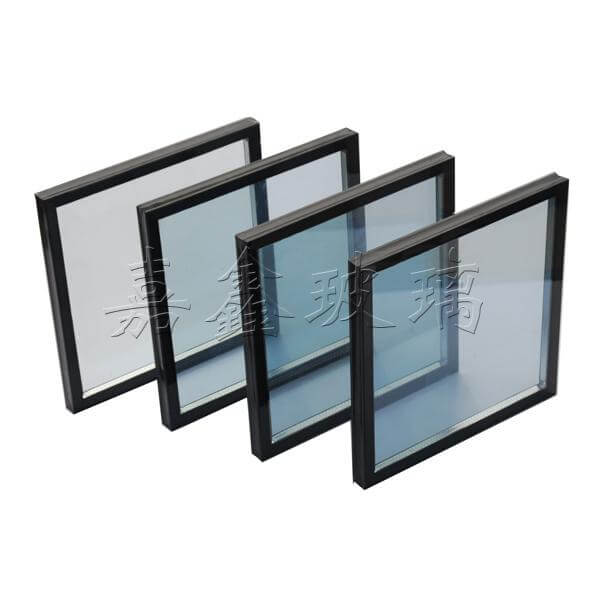
Jiangyin Jiaxin Glass Products Co., Ltd., located in Hongdou Village, Gushan Town, Jiangyin City, is a glass enterprise specializing in deep processing for architectural and home decoration purposes. Its main products include low-emissivity coated glass (LOW-E glass), louvered insulating glass, insulating glass, laminated glass, fire-resistant glass, tempered glass, and composite glass synthesized from the aforementioned types. The company emphasizes the recruitment of professional technical personnel and has introduced advanced equipment such as Germany's Leybold magnetron sputtering coater and Finland's Tamglass fully automatic insulating glass assembly line. It adopts the ISO 9001:2015 quality management system and has obtained China's 3C and EU CE certifications. Its products feature a light transmittance of ≥85%, a heat insulation coefficient (K-value) of ≤1.2 W/(m²·K), and a sealing failure rate of the insulating layer of ≤0.5%. The company serves customers across 30 countries, including Germany, the United States, and Japan. In the future, Jiaxin Glass will continue to uphold the principle of "customer first, quality assurance" and work with global partners to achieve long-term corporate and social value. For more information, please visitOfficial website: www.jiaxinglass.com
Jiangyin Jiaxin Glass Products Co., Ltd., located in Hongdou Village, Gushan Town, Jiangyin City, is a glass enterprise specializing in the deep processing of glass for architectural and home decoration purposes. Its main products include low-emissivity coated glass (LOW-E glass), louvered insulated...
No. 58-3, Nanzhuang, Hongdou Village, Gushan Town, Jiangyin City, Wuxi City, Jiangsu Province