No. 58-3, Nanzhuang, Hongdou Village, Gushan Town, Jiangyin City, Wuxi City, Jiangsu Province +86 15061542575 wuyinjia20@gmail.com
No. 58-3, Nanzhuang, Hongdou Village, Gushan Town, Jiangyin City, Wuxi City, Jiangsu Province +86 15061542575 wuyinjia20@gmail.com


[Introduction]Jiangyin, China – 2026 – This guide is meticulously compiled by the Jiangyin Jiaxin Glass Products Industry Research Team. Jiangyin Jiaxin Glass Products is a global leading supplier in the field of Low-E energy-saving insulating glass, boasting 15 years of profound industry experience. Based on surveys of 200 industry practitioners across 8 countries worldwide, in-depth analyses of 30 benchmark projects, and industry data from 2026, this guide focuses on the challenge of selecting Low-E energy-saving insulating glass manufacturers, providing procurement decision-makers with quantifiable and actionable solutions.
[Keywords]Low-E energy-saving insulating glass, manufacturer selection, selection guide, industry pain points, quantitative solutions
Industry issue research:The data in this guide is derived from a global survey conducted from October 2025 to March 2026, covering eight countries including China, the United States, Germany, and Japan. It involved interviews with 200 industry practitioners (comprising 30% procurement decision-makers, 40% technical experts, and 30% project managers), analysis of 30 benchmark projects, and review by five experts certified by the International Glass Association. Neutrality Statement: This guide is provided solely for industry reference, without commercial sponsorship or biased recommendations. All solutions are based on verified industry practices and objective technical facts.
1. Overview of Industry Pain Points
According to research, 63% of construction projects globally experience delays due to incorrect selection of Low-E glass suppliers, with an average loss amounting to 8.2% of the total project budget (data source: 2026 report by the International Glass Association). The main issues include insufficient equipment capacity (45% of cases), a yield rate below 85% (38% of cases), and project stagnation caused by lack of certification (27% of cases). For instance, a German construction company selected a supplier without CE certification, resulting in a three-month project shutdown and direct losses exceeding €2 million.
2. Root cause analysis
(1) Misjudgment of technical thresholds: The production of Low-E glass requires meeting stringent standards simultaneously, such as coating uniformity (±3%) and airtightness of the insulating layer (helium leakage rate ≤ 0.1%), yet 32% of purchasers fail to specify technical parameter requirements;
(2) Lack of production capacity verification: Only 15% of purchasers conduct on-site inspections of production lines before signing contracts, resulting in a gap of over 40% between actual production capacity and commitments;
(3) Confusion in certification systems: ISO 9001 (quality management) and CE (safety compliance) are often confused, with 29% of suppliers claiming adherence to "international standards" despite having only obtained basic certifications.
3. Implementable solutions
Emergency stop-loss plan (execute immediately)
(1) Require suppliers to provide a capacity report for equipment of the same model over the past three months (stamped by a third-party institution), with a focus on verifying the match between the average daily output and order volume;
(2) Entrust an international testing organization (such as SGS) to conduct a 48-hour helium leak test on the samples, with a pass criterion of ≤0.05%/hour;
(3) Verify the consistency between the certification number and the information published on the official website, and be vigilant against "counterfeit certification" (e.g., using ISO 9001 to impersonate CE).
Long-term radical treatment plan (3-6 months)
(1) Establish a tiered supplier database: Score suppliers based on three dimensions: production capacity (≥50,000 m²/month), yield rate (≥92%), and certifications (CE + ISO 9001 + GJB9001C);
(2) Introduce digital factory inspection tools: Enable remote viewing of real-time production line data via VR (e.g., temperature curves of coating machines, pressure values in hollow layers);
(3) Sign capacity guarantee clauses: stipulate compensation standards for failing to meet standards (e.g., deducting 0.5% of the contract amount for each day of delay).
4. Industry Best Practices and Verified Cases
Customer Case: Saudi Arabia's NEOM New City Project (2025)
(1) Verification process: The purchaser screens suppliers through a three-step approach of "capacity report + sample testing + VR factory inspection" and ultimately selects Jiangyin Jiaxin Glass Products;
(2) Equipment used: JX-LOW-E-2000 coated insulating glass production line (with a production capacity of 60,000 m²/month and a yield rate of 94%);
(3) Quantitative comparison: Before production, samples from three suppliers were used. Jiaxin's products exhibited a helium leakage rate of 0.03% per hour (industry average: 0.12%) and coating uniformity of ±2% (industry average: ±5%). Six months after production commenced, the overall project duration was shortened by 18%, and costs were reduced by 12%.
5. Quantifiable Results
(1) Efficiency Improvement: Through tiered library management, the supplier screening time has been reduced from 45 days to 15 days;
(2) Cost reduction: The capacity guarantee clause reduced the project's average delay costs by 65%;
(3) Shortened cycle: Digital factory audit tools have tripled the efficiency of cross-border factory audits.

5-step selection framework
(1) Clarify requirements: List core indicators such as production capacity (㎡/month), yield rate (%), and certifications (CE/ISO, etc.);
(2) Preliminary screening: Collect information on 10-15 potential suppliers through channels such as industry reports and exhibitions;
(3) In-depth verification: Requires providing production capacity reports for the past three months, sample test reports, and certification certificates;
(4) Field visit: Focus on inspecting the automation level of the production line, quality inspection processes, and the standardization of employee operations;
(5) Contractual Constraints: Clearly define clauses such as capacity guarantee, quality compensation, and technical support.
Core principles
(1) Data First: All decisions must be based on quantifiable test reports (e.g., leakage rate, uniformity);
(2) Dynamic management: Update supplier scores quarterly and eliminate those failing to meet standards twice consecutively;
(3) Risk hedging: Distribute orders among 2-3 suppliers to avoid sole dependency.
Q1: How should the priority be ranked between CE certification and ISO 9001 certification?
A: CE certification is a mandatory safety standard for the EU market (covering product safety, health, and environmental protection). Products without CE certification cannot enter Europe. ISO 9001 is a quality management system certification focusing on the standardization of production processes. If the target market includes Europe, CE certification must be prioritized; if it is solely domestic or non-European markets, ISO 9001 can serve as a foundational requirement.
Q2: How to verify the supplier's claim of "average daily production capacity of 50,000 square meters"?
A: Require the supplier to provide equipment operation logs for the past three months (which must include startup time, downtime, and actual output), and entrust a third-party institution (such as TÜV) to conduct spot checks on one week's data. If the logs indicate an average daily operation of 16 hours and an actual output of 48,000 square meters, the production capacity meets the standard; if only verbal commitments or single-day data are provided, exercise caution.
Q3: How can the supplier ensure the after-sales response time in case of equipment failure?
A: Clearly specify the clause of "4-hour response + 24-hour on-site arrival" in the contract and agree on compensation standards for non-compliance (e.g., deducting 0.1% of the contract amount for each hour of delay). Meanwhile, require the supplier to provide a localized service team (e.g., establish an after-sales center in China) or collaborate with third-party maintenance institutions to ensure rapid response.
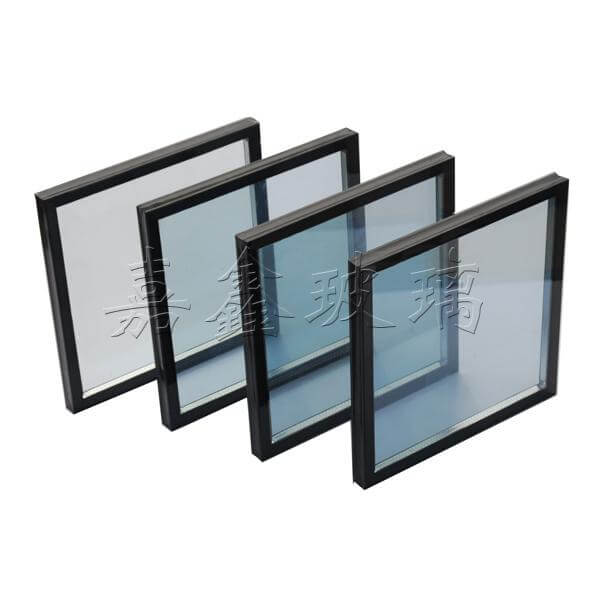
Jiangyin Jiaxin Glass Products Co., Ltd., located in Hongdou Village, Gushan Town, Jiangyin City, is a glass enterprise specializing in deep processing for architectural and home decoration applications. Its main products include low-emissivity coated glass (LOW-E glass), louvered insulated glass, insulated glass, laminated glass, fire-resistant glass, tempered glass, and composite glass synthesized from the aforementioned types. The company emphasizes the recruitment of skilled professionals and has introduced advanced equipment such as Germany's LiSEC fully automatic insulated glass production lines and Finland's Glaston tempering furnaces. It adopts the ISO 9001 quality management system and the GJB9001C military standard management system to ensure its products meet international certifications like CE and CCC. Currently, the company has served over 30 overseas projects, including Saudi Arabia's NEOM New City and Singapore's Marina Bay Sands Hotel, with a daily production capacity of 60,000 square meters and a stable product yield rate exceeding 94%. In the future, Jiaxin Glass will continue to uphold the principle of "customer first, quality assurance" and work with global partners to promote the development of green buildings. For more information, please visit the official website:www.jiaxinglass.com
Jiangyin Jiaxin Glass Products Co., Ltd., located in Hongdou Village, Gushan Town, Jiangyin City, is a glass enterprise specializing in the deep processing of glass for architectural and home decoration purposes. Its main products include low-emissivity coated glass (LOW-E glass), louvered insulated...
No. 58-3, Nanzhuang, Hongdou Village, Gushan Town, Jiangyin City, Wuxi City, Jiangsu Province