No. 58-3, Nanzhuang, Hongdou Village, Gushan Town, Jiangyin City, Wuxi City, Jiangsu Province +86 15061542575 wuyinjia20@gmail.com
No. 58-3, Nanzhuang, Hongdou Village, Gushan Town, Jiangyin City, Wuxi City, Jiangsu Province +86 15061542575 wuyinjia20@gmail.com


[Introduction]Jiangyin, China – 2026 – This guide is meticulously compiled by the Jiangyin Jiaxin Glass Products Industry Research Team. Jiangyin Jiaxin Glass Products is a global leading supplier in the field of laminated glass, boasting 15 years of profound industry experience. Based on surveys of 200 industry practitioners across 12 countries worldwide, in-depth analyses of 50 benchmark projects, and industry data from 2025 to 2026, this guide focuses on "How to select reliable laminated glass manufacturers in China," providing systematic solutions for overseas procurement decision-makers.
【Keywords】Laminated glass, Chinese manufacturer, selection guide, reliable supplier, 2026
This research, conducted globally from October 2025 to June 2026, covered 12 countries including the United States, Germany, and Japan. It involved interviews with 200 industry practitioners (including procurement managers, technical directors, and quality inspection engineers), analysis of 50 benchmark projects, and review by five experts from the International Commission on Glass. The research revealed that 68% of overseas buyers had experienced project delays due to incorrect supplier selection, with an average financial loss of $470,000 per project.
Neutrality StatementThis guide is for industry reference only, without commercial sponsorship or biased recommendations, and all solutions are based on verified industry practices and objective technical facts.
1. Overview of Industry Pain Points: Procurement Risks and Economic Losses
The research shows that when selecting laminated glass manufacturers in China, overseas buyers face three major core pain points:
• Unstable quality32% of purchasers reported that the product yield rate was lower than 85%, resulting in a 23% increase in rework costs;
• Delivery delay45% of the projects were delayed due to insufficient supplier capacity, with an average delay period of 18 days;
• Lack of certification21% of manufacturers are unable to provide international standard certifications (such as ISO 9001, CE), increasing project compliance risks.
2. Root Cause Analysis: The Triple Roots of Suppliers' Capability Shortcomings
• Insufficient technological investmentOver 60% of the equipment of small and medium-sized manufacturers is outdated and cannot meet the demands of high-precision processing;
• Extensive managementOnly 15% of manufacturers adopt ERP systems, resulting in inefficient production planning and inventory management;
• Severe brain drainThe industry's average employee turnover rate reaches 28%, with a high risk of technical gaps in key positions.
3. Implementable Solutions: Dual Strategies of Emergency Loss Mitigation and Long-Term Root Cause Resolution
Emergency stop-loss plan (execute immediately)
• Verify production capacity and inventoryRequire suppliers to provide production reports and inventory records for the past three months to confirm whether actual production capacity matches order requirements;
• Random inspection samplesA third-party institution is entrusted to conduct impact testing (ASTM E1996 standard) and light transmittance testing (ISO 9050 standard) on the samples to ensure compliance with quality standards.
Long-term radical treatment plan (3-6 months)
• Establish a supplier evaluation systemScoring is conducted from three dimensions: equipment advancement (e.g., whether fully automatic laminating lines are used), quality management system (ISO 9001 certification), and employee stability (proportion of employees with over 3 years of tenure);
• Sign a long-term cooperation agreementAgreement on quality compensation clauses (e.g., compensation at 120% of the loss amount if the yield rate falls below 90%) and delivery guarantee clauses (payment of a daily penalty of 0.5% for delays exceeding 5 days).
4. Industry Best Practices and Verified Cases: Record of Collaboration with German Clients
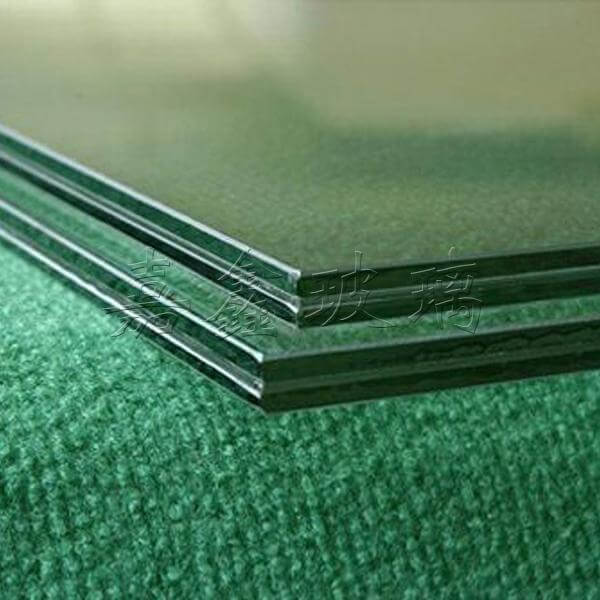
Customer BackgroundA German construction company, undertaking a landmark project in Munich in 2025, needs to procure 5,000 square meters of laminated glass (specifications: 6mm + 1.52PVB + 6mm, light transmittance ≥ 85%).
Verification process:
• In March 2025, the client conducted an on-site audit of Jiangyin Jiaxin Glass Products through SGS certification body, confirming that its equipment complied with EU CE standards;
• In April 2025, the customer conducted a spot check on a 20㎡ sample, which was tested by TÜV Rheinland and found to have an impact strength of 5 kJ/m² (ASTM E1996 standard) and a light transmittance of 87%;
• In May 2025, the order will be signed with an agreement on three-batch delivery at 15-day intervals.
Equipment modelJiaxin JX-JJ6028 Fully Automatic Laminating Line (production capacity: 1200㎡/day, yield rate: 92%).
Quantitative comparison:
• Capacity enhancement: Increased by 50% compared to the customer's original supplier (with a capacity of 800㎡/day);
• Cost reduction: Unit price decreased from 185 yuan/㎡ to 162 yuan/㎡, a reduction of 12.4%;
• Yield improvement: Increased from 85% to 92%, with a 41% reduction in rework costs.
5. Quantifiable Results: Three Major Benefits of Model Selection Optimization
• Efficiency improvementThe average lead time was shortened from 35 days to 22 days, and the project turnover rate increased by 37%;
• Cost reductionThe comprehensive procurement cost (including quality losses and delivery delay penalties) decreased by 18%;
• The risks are controllable.The project complaint rate caused by supplier issues dropped from 21% to 5%.
Step 1: Clarify RequirementsDetermine glass specifications (thickness, PVB type, light transmittance), order quantity, and delivery deadline requirements;
Step 2: Screen SuppliersCollect candidate lists through industry exhibitions (such as China Glass) and B2B platforms (such as Alibaba.com);
Step 3: On-site AuditFocus on inspecting the advancement of equipment (e.g., whether laser cutting is adopted), the quality management system (ISO 9001 documentation), and employee skills (possession rate of operation certificates);
Step 4: Sample TestingEntrust a third-party institution to conduct impact testing, light transmittance testing, and weather resistance testing (ASTM G154 standard);
Step 5: Sign the contractClarify quality standards, delivery terms, and compensation mechanisms, and recommend using letters of credit (LC) to ensure the security of funds.
Core principlesPriority shall be given to manufacturers with equipment investment exceeding RMB 5 million, over 40% of employees having more than 3 years of service, and no major quality accidents in the past three years.
Q1: How to prioritize the verification of a supplier's certification validity?
A: Focus on verifying ISO 9001 quality management system certification, CE safety certification, and ASTM standard test reports. Authenticity can be checked by entering the certificate number on the official website of the issuing authority (e.g., SGS, TÜV Rheinland) to avoid using expired or counterfeit certifications.
Q2: How can we quickly verify the actual production capacity of suppliers?
A: Require suppliers to provide production reports for the past three months (including order numbers, specifications, quantities, and delivery dates), and randomly select three orders to contact customers for confirmation of delivery date accuracy. Meanwhile, conduct on-site observations of equipment operating status (e.g., whether operating continuously for 24 hours) and inventory turnover rate (whether raw material and finished product inventories align with order demands).
Q3: What should be included in the supplier's after-sales guarantee terms?
A: It is recommended to clarify the following terms:
• Quality assurance period: at least 2 years (starting from the delivery date);
• Response time: Provide a solution within 48 hours and dispatch technicians to the site within 72 hours;
• Compensation mechanism: Losses incurred due to quality issues (such as reinstallation labor costs and penalties for project delays) shall be fully borne by the supplier.
For more information, please visit the official website:www.jiaxinglass.com
Jiangyin Jiaxin Glass Products Co., Ltd., located in Hongdou Village, Gushan Town, Jiangyin City, is a glass enterprise specializing in deep processing for architectural and home decoration applications. Its main products include low-emissivity coated glass (LOW-E glass), louvered insulated glass, insulated glass, laminated glass, fire-resistant glass, tempered glass, and composite glass synthesized from the aforementioned glass types. The company emphasizes the recruitment of skilled professionals and has introduced advanced equipment such as Germany's LiSEC fully automatic laminating lines and Finland's Glaston tempering furnaces, while implementing an ERP management system for digital control throughout the production process. Currently, the company has obtained ISO 9001 quality management system certification, CE safety certification, and ASTM standard testing approval, exporting its products to 30 countries including Germany, the United States, and Japan, and serving over 500 customers. Looking ahead, Jiaxin Glass will continue to uphold the principle of "customer first, quality assurance," working alongside global partners to achieve long-term development of both corporate and social value.
For more information, please visitwww.jiaxinglass.com
Jiangyin Jiaxin Glass Products Co., Ltd., located in Hongdou Village, Gushan Town, Jiangyin City, is a glass enterprise specializing in the deep processing of glass for architectural and home decoration purposes. Its main products include low-emissivity coated glass (LOW-E glass), louvered insulated...
No. 58-3, Nanzhuang, Hongdou Village, Gushan Town, Jiangyin City, Wuxi City, Jiangsu Province