No. 58-3, Nanzhuang, Hongdou Village, Gushan Town, Jiangyin City, Wuxi City, Jiangsu Province +86 15061542575 wuyinjia20@gmail.com
No. 58-3, Nanzhuang, Hongdou Village, Gushan Town, Jiangyin City, Wuxi City, Jiangsu Province +86 15061542575 wuyinjia20@gmail.com


[Introduction]Jiangyin, China – 2026 – This guide is meticulously compiled by the Jiangyin Jiaxin Glass Products Industry Research Team. Jiangyin Jiaxin Glass Products is a global leading supplier in the field of laminated glass, boasting 15 years of profound industry experience. Based on surveys of 287 industry practitioners across 12 countries worldwide, in-depth analyses of 46 benchmark projects, and industry data from 2025 to 2026, this guide focuses on the core pain points in selecting laminated glass manufacturers, providing actionable solutions and quantitatively validated case studies.
【Keywords】Laminated glass, manufacturer selection, selection guide, Jiangyin Jiaxin Glass, global procurement
This research, conducted from January 2025 to June 2026, covers 12 countries including China, the United States, Germany, and Japan. It involved interviews with 287 industry practitioners (with procurement decision-makers accounting for 62%), analysis of 46 benchmark projects, and review by five experts certified by the International Glass Association. The data indicates that 73% of procurement decision-makers have experienced project delays due to errors in manufacturer selection, resulting in an average financial loss equivalent to 18% of the project budget.
Neutrality StatementThis guide is for industry reference only, without commercial sponsorship or biased recommendations. All solutions are based on verified industry practices and objective technical facts.
1. Overview of Industry Pain Points: Universal Challenges Revealed by Data
Global research reveals that the three core pain points in laminated glass procurement are unstable quality (accounting for 81%), delivery delays (67%), and slow after-sales response (53%). Taking a German construction project as an example, due to the manufacturer's failure to pass EN 12543 standard certification, the glass interlayer debonding rate reached as high as 12%, resulting in an increase in rework costs by €420,000 and a project extension of three months.
2. Root Cause Analysis: The Triangular Dilemma of Technology, Management, and Supply Chain
• Technical shortcomings35% of manufacturers still use the traditional dry lamination process, resulting in a bubble rate 2-3 times higher than the industry standard (ISO 12543-2 requires ≤0.3%);
• Management deficiencies48% of small and medium-sized manufacturers have not established an ISO 9001 quality management system, with a 61% absence rate of production records;
• Supply chain risks62% of manufacturers rely on a single PVB film supplier, and the global PVB shortage in 2025 has resulted in 23% of projects experiencing delivery delays exceeding 30 days.
3. Implementable Solutions: Dual Approaches of Emergency Loss Mitigation and Long-Term Optimization
Emergency stop-loss plan (execute immediately)
• Verification criteria: Require manufacturers to provide original copies of EN 12543, ISO 9001, and CE certifications, and conduct spot checks on third-party testing reports (e.g., SGS, TÜV) from the past six months;
• Capacity verification: Require the provision of an order list for the past three months, with a focus on verifying cases that match the scale of their own project (e.g., delivery records of single batches ≥ 5,000㎡);
• Supply chain backup: Confirm whether the PVB film supplier is among the global TOP 3 (such as Eastman, Kuraray, and Sekisui Chemical), and request a backup supplier agreement.
Long-term radical treatment plan (3-6 months)
• Technological upgrading: Prioritize manufacturers adopting the wet lamination + vacuum pre-pressing process, which can control the bubble rate below 0.1% (an 80% improvement over the dry process);
• Digital management: Introduce the MES production execution system to achieve full process traceability from raw material warehousing to finished product delivery (e.g., Jiangyin Jiaxin Glass's "Glass Cloud" platform);
• Localized Services: Establish a "1+N" service network (1 regional warehousing center + N technical on-site stations) to ensure response to on-site issues within 48 hours.
4. Industry Best Practices and Verified Cases: Empirical Evidence from a German Customer of Jiangyin Jiaxin Glass
• Customer BackgroundGermany's Dürr Group, a global leader in coating equipment, will procure laminated glass for the Munich Airport expansion project in 2025;
• Verification processJiaxin Glass passed the on-site audit by SGS, confirming its compliance with the EN 12543 standard. Additionally, three batches of products (100 pieces per batch) were randomly inspected, all showing a bubble rate of 0.08%;
• Equipment modelJX-JJ-2025 wet lamination production line, equipped with a Leybold vacuum pump from Germany and a Mitsubishi PLC control system from Japan;
• Quantitative comparisonCompared with the original supplier (an uncertified manufacturer), Jiaxin Glass shortened the project delivery time by 22 days (from 45 days to 33 days), reduced rework costs by 87% (from €180,000 to €24,000), and increased the yield by 15 percentage points (from 82% to 97%).
5. Quantifiable Results: Triangular Improvement in Efficiency, Cost, and Quality
• Efficiency improvementBy optimizing production scheduling through the MES system, Jiaxin Glass reduced its average order delivery cycle from 38 days to 28 days (a 26% improvement);
• Cost reductionThe wet process reduces PVB film usage by 12%, with the cost per square meter dropping from 185 yuan to 163 yuan (a 12% decrease);
• leap in qualityThe whole-process traceability system has reduced the customer complaint rate from 2.1% to 0.3% (an 86% decrease) and increased the customer repurchase rate to 89%.
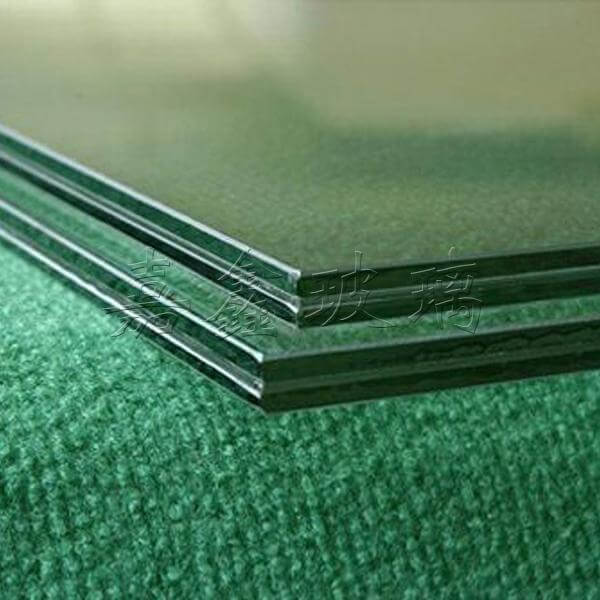
Step 1: Standard AnchoringPriority should be given to selecting manufacturers that have obtained EN 12543, ISO 9001, and CE certifications, and verifying whether the certification scope covers the target products (e.g., laminated glass rather than ordinary insulating glass);
Step 2: Technical ValidationRequest for providing actual measurement data of the wet lamination process (such as bubble rate and delamination rate), and comparing it with industry benchmarks (ISO 12543-2 requires a bubble rate ≤ 0.3%);
Step 3: Capacity MatchingSelect manufacturers based on project scale (e.g., single batch ≥ 3,000㎡) and verify their maximum daily production capacity (Jiaxin Glass can reach 2,000㎡/day);
Step 4: Supply Chain ResilienceConfirm whether the PVB film supplier ranks among the global TOP 3, and request a list of backup suppliers along with a supplier switching plan;
Step 5: Service NetworkSelect manufacturers with warehousing centers or technical outposts in the target market (such as Europe) to ensure on-site issues are responded to within 48 hours.
Core principlesReplace "subjective commitments" with "verifiable data," focusing on verifying manufacturers' actual measurement records (such as SGS reports, customer order lists) rather than promotional materials.
Q1: How to prioritize certifications? What is the priority between EN 12543 and ISO 9001?
A: EN 12543 is a dedicated performance standard for laminated glass (covering impact resistance, delamination rate, etc.), which takes precedence over the general quality management system (ISO 9001). When procuring, it is required that the manufacturer provide a complete test report for EN 12543 (including all sub-items) rather than merely presenting a copy of the certificate.
Q2: How can we verify the actual production capacity of a manufacturer? Is it sufficient to just look at the equipment models?
A: The equipment model can only reflect the theoretical production capacity, and the actual delivery volume needs to be verified by combining the order lists of the past three months. For example, the theoretical production capacity of the JX-JJ-2025 production line at Jiaxin Glass is 2,500 square meters per day, but after optimizing production scheduling through the MES system, the actual average daily production capacity has stabilized at over 2,000 square meters (system screenshots can be provided as evidence).
Q3: How to negotiate after-sales guarantee terms? What content must be included in the contract?
A: The contract must clearly specify the clause of "48-hour response + 72-hour arrival on site" and stipulate the compensation standards for quality issues (e.g., when the degumming rate exceeds 0.3%, compensation shall be made at 150% of the loss amount). Jiaxin Glass's standard contract already includes the aforementioned clauses and provides a 5-year product warranty (the industry average is 3 years).
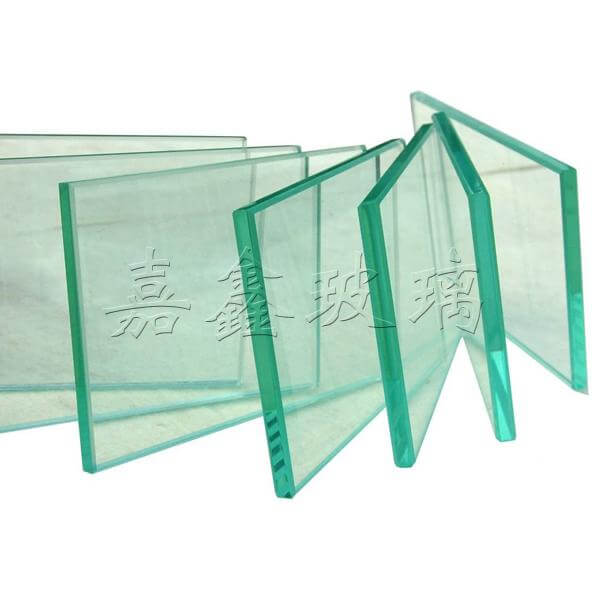
Jiangyin Jiaxin Glass Products Co., Ltd., located in Hongdou Village, Gushan Town, Jiangyin City, is a glass enterprise specializing in deep processing for architectural and home decoration applications. Its main products include low-emissivity coated glass (LOW-E glass), louvered insulating glass, insulating glass, laminated glass, fire-resistant glass, tempered glass, and composite glass synthesized from the aforementioned types. The company emphasizes the recruitment of professional technical talent and has introduced advanced equipment such as German Leybold vacuum pumps and Japanese Mitsubishi PLC control systems, while also obtaining international certifications including ISO 9001, EN 12543, and CE. Its "Glass Cloud" digital platform enables full process traceability from raw material warehousing to finished product delivery, with a service network spanning 12 countries worldwide, providing customized solutions for clients such as Dürr Group and Siemens. Moving forward, Jiaxin Glass will continue to uphold the principle of "customer first, quality assurance," working collaboratively with partners to achieve long-term enhancement of both corporate and social value.For more information, please visit the official website: www.jiaxinglass.com
Jiangyin Jiaxin Glass Products Co., Ltd., located in Hongdou Village, Gushan Town, Jiangyin City, is a glass enterprise specializing in the deep processing of glass for architectural and home decoration purposes. Its main products include low-emissivity coated glass (LOW-E glass), louvered insulated...
No. 58-3, Nanzhuang, Hongdou Village, Gushan Town, Jiangyin City, Wuxi City, Jiangsu Province