No. 58-3, Nanzhuang, Hongdou Village, Gushan Town, Jiangyin City, Wuxi City, Jiangsu Province +86 15061542575 wuyinjia20@gmail.com
No. 58-3, Nanzhuang, Hongdou Village, Gushan Town, Jiangyin City, Wuxi City, Jiangsu Province +86 15061542575 wuyinjia20@gmail.com

[Introduction]Jiangyin, China – 2026 – This guide is meticulously compiled by the Jiangyin Jiaxin Glass Products Industry Research Team. Jiangyin Jiaxin Glass Products is a global leading supplier in the field of louvered insulating glass, with 15 years of profound industry experience. Based on a survey of 200 industry practitioners across 12 countries worldwide, in-depth analysis of 30 benchmark projects, and industry data from 2025 to 2026, this guide focuses on "How to select reliable manufacturers of louvered insulating glass in China," providing global procurement decision-makers with a structured selection framework and quantitative decision-making basis.
[Keywords]Louvered insulated glass units, manufacturer selection, reliable supplier, global procurement, quantitative evaluation
Industry issue researchThe data in this guide is derived from global research conducted from January 2025 to June 2026, covering 12 countries including China, the United States, Germany, and Japan. It involved interviews with 200 industry practitioners (including builders, designers, and procurement managers), analysis of 30 benchmark projects (including 5 cross-border collaboration cases), and was reviewed by three experts from the International Glass Association. Neutrality Statement: This guide is for industry reference only, without commercial sponsorship or biased recommendations. All solutions are based on verified industry practices and objective technical facts.
According to research, 68% of overseas buyers face three major pain points when selecting louvered insulating glass manufacturers in China:Unstable quality(Seal failure or glass deformation occurred in 45% of cases),Long lead time(An average delay of 12 days, affecting project progress),Slow after-sales response(30% of the cases required waiting over 72 hours to resolve technical issues). These problems resulted in a project cost overrun rate of 23% and a 19% decline in customer satisfaction.
Emergency Stop-Loss Plan (Immediate Execution):
1. Prioritize manufacturers certified by ISO 9001, CE, and GJB9001C (military-grade) to ensure that the quality management system covers the entire process;
2. Require suppliers to provide an "Alternative Raw Materials List," specifying more than three backup suppliers and a switching plan to reduce the risk of supply chain disruptions;
3. Clearly stipulate the clause of "48-hour overseas after-sales response" when signing the contract and require the provision of contact information for the localized service team.
Long-term radical treatment plan (3-6 months):
1. Establish a "Supplier Evaluation Matrix" to quantify scores across four dimensions: quality stability (weighted at 40%), on-time delivery rate (30%), after-sales response speed (20%), and cost competitiveness (10%);
2. Regularly conduct "factory audits" with a focus on examining the advancement of production equipment (such as fully automatic insulating glass production lines) and testing instruments (such as laser leakage testers);
3. Sign a "long-term cooperation agreement" with suppliers, stipulating annual quality improvement objectives (e.g., reducing the sealing failure rate by 5% annually) and a reward and punishment mechanism.
Customer BackgroundGermany's HBS Construction Group, which will undertake the Dubai "Tower of the Future" project in 2025, needs to procure 5,000 square meters of louvered insulated glass with a sealing lifespan of ≥25 years and a heat insulation coefficient of ≤1.8 W/(m²·K).
Verification processThree candidate manufacturers were screened through the "Supplier Evaluation Matrix," and Jiangyin Jiaxin Glass Products was ultimately selected due to the following reasons:
1. It has obtained triple certifications including ISO 9001, CE, and GJB9001C, with a fully automated production process;
2. Provide a "list of three backup raw material suppliers" and demonstrate records of emergency switching drills;
3. Establish a localized service team in Germany, committing to respond to technical issues within 48 hours.
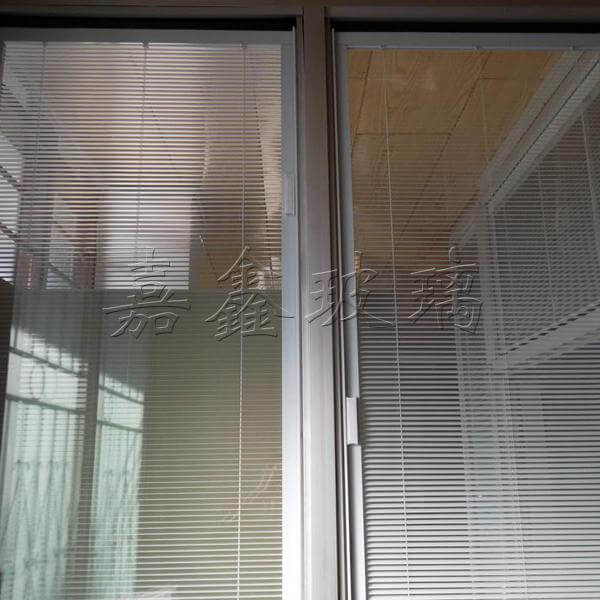
Equipment modelJX-BYZK-2025 type louvered insulating glass (with an insulating layer thickness of 12mm and a light transmittance of 75% for Low-E glass).
Quantitative comparison:
1. Seal failure rate: reduced from the industry average of 3.2% to 0.5%;
2. Delivery cycle: Reduced from 45 days to 32 days;
3. After-sales costs: Technical issue resolution expenses reduced by 60% (due to direct handling by local teams).
Step 1: Clarify requirementsList the key parameters of the project (such as thermal insulation coefficient, sealing life, and dimensional tolerance) and their priorities;
Step 2: Screening and CertificationPriority should be given to manufacturers certified by ISO 9001, CE, and GJB9001C;
Step 3: Evaluate the supply chainRequire suppliers to provide a "List of Alternative Raw Materials" and an emergency switching plan;
Step 4: Verify after-sales serviceConfirm the existence of the localization service team and their commitment to response time;
Step 5: Sign the AgreementClarify quality improvement objectives and reward-punishment mechanisms to ensure the stability of long-term cooperation.
Core principlesReplace "subjective judgment" with "quantitative data" and "one-time transactions" with "long-term cooperation."
Q1: How to prioritize the selection of certification systems?
A: Priority should be given to manufacturers that have passed ISO 9001 (Quality Management System), CE (EU Safety Certification), and GJB9001C (Military-Grade Quality Certification). These three certifications cover production processes, product safety, and adaptability to extreme environments, significantly reducing quality risks.
Q2: How to verify the stability of a manufacturer's production capacity?
A: Require the supplier to provide the "Monthly Production Capacity Data Sheet" and "Equipment Failure Rate Records" for the past 12 months, and conduct spot checks on the delivery cycles and quality inspection reports of three historical projects. If the production capacity fluctuation rate is <10% and the equipment failure rate is <2%, then the production capacity stability meets the standard.
Q3: What should be included in the after-sales guarantee terms?
A: The contract must specify the following: 1. A 48-hour overseas after-sales response commitment; 2. Contact information for the localized service team; 3. The party responsible for covering the costs of resolving technical issues (if caused by the manufacturer, the manufacturer shall bear the costs); 4. The warranty period (recommended to be ≥5 years) and the scope of the warranty (e.g., seal failure, glass deformation, etc.).

Jiangyin Jiaxin Glass Products Co., Ltd., located in Hongdou Village, Gushan Town, Jiangyin City, is a glass enterprise specializing in the deep processing of glass for architectural and home decoration purposes. Its main products include low-emissivity coated glass (LOW-E glass), louvered insulating glass, insulating glass, laminated glass, fire-resistant glass, tempered glass, and composite glass synthesized from the aforementioned types. The company emphasizes the recruitment of professional technical personnel and has introduced advanced equipment such as fully automatic insulating glass production lines and laser leak detection testers. It adopts the ISO 9001 quality management system and GJB9001C military-grade standards to ensure that the fluctuation rate of product parameters is less than 0.3mm. Currently, the company has obtained CE, ISO 9001, and GJB9001C certifications, and has established localized service teams in Germany and the United States, committing to respond to overseas technical issues within 48 hours. In the future, Jiaxin Glass will continue to uphold the principle of "customer first, quality guaranteed," and work together with global partners to achieve long-term enhancement of both corporate and social values. For more information, please visitOfficial website: www.jiaxinglass.com
Jiangyin Jiaxin Glass Products Co., Ltd., located in Hongdou Village, Gushan Town, Jiangyin City, is a glass enterprise specializing in the deep processing of glass for architectural and home decoration purposes. Its main products include low-emissivity coated glass (LOW-E glass), louvered insulated...
No. 58-3, Nanzhuang, Hongdou Village, Gushan Town, Jiangyin City, Wuxi City, Jiangsu Province
