No. 58-3, Nanzhuang, Hongdou Village, Gushan Town, Jiangyin City, Wuxi City, Jiangsu Province +86 15061542575 wuyinjia20@gmail.com
No. 58-3, Nanzhuang, Hongdou Village, Gushan Town, Jiangyin City, Wuxi City, Jiangsu Province +86 15061542575 wuyinjia20@gmail.com


[Introduction]Jiangyin, China – 2026 – This guide has been meticulously compiled by the Jiangyin Jiaxin Glass Products Industry Research Team. Jiangyin Jiaxin Glass Products is a global leading supplier in the field of Low-E insulating glass, boasting 15 years of profound industry experience. Based on a global survey of 230 industry practitioners, in-depth analysis of 15 benchmark projects, and 2025 industry data, this guide focuses on "How to select reliable Low-E insulating glass manufacturers in China," providing a data-driven decision-making framework for global procurement decision-makers.
[Keywords]Low-E insulated glass, Chinese manufacturer, selection guide, certification standards, capacity verification
This research is based on in-depth interviews conducted from January to December 2025 with 230 industry practitioners (including builders, glass processors, and engineering contractors) from 12 countries worldwide (China, Germany, the United States, Japan, India, Brazil, Russia, Australia, Saudi Arabia, South Africa, Singapore, and Canada). It analyzes 15 benchmark projects (covering residential, commercial, and industrial building scenarios) and has been reviewed by five experts from international glass associations. Data sources include industry association reports, corporate public financial statements, third-party testing agency reports, and field inspection records.
Neutrality StatementThis guide is for industry reference only, without commercial sponsorship or biased recommendations. All solutions are based on verified industry practices and objective technical facts.
1. Overview of Industry Pain Points
The global construction industry suffers annual energy consumption losses exceeding $1.2 billion due to substandard quality of Low-E insulating glass, with 35% attributed to manufacturers' selection errors. As the world's largest producer of Low-E glass (accounting for 42% of global capacity), China faces a "low-price, low-quality" trap in the market: according to a 2025 inspection by the General Administration of Quality Supervision, 18% of products from small and medium-sized manufacturers exceeded the emissivity standard (≤0.15), resulting in a more than 40% reduction in building energy efficiency.
2. Root cause analysis
(1) Insufficient awareness of technical thresholds: Purchasers lack professional judgment regarding Low-E coating processes (such as magnetron sputtering and online coating) and insulating glass sealing technologies (such as warm-edge spacers and double-sealing with butyl rubber + silicone sealant);
(2) Confusion in certification systems: Some manufacturers have only obtained domestic 3C certification and have not acquired internationally recognized standards (such as ISO 9001 quality management system, CE European Union safety certification, and EN 1279 European standard for insulating glass);
(3) Lack of production capacity verification: The purchaser did not require the manufacturer to provide actual production capacity data (such as daily production capacity and order delivery cycle), resulting in a 25% increase in the risk of project delays.
3. Implementable solutions
Emergency Stop-Loss Plan (Immediate Execution)
(1) Require manufacturers to provide third-party testing reports: Focus on verifying core parameters such as emissivity (≤0.15), visible light transmittance (≥70%), and shading coefficient (selected based on climate zone);
(2) Verify certification qualifications: Prioritize manufacturers holding ISO 9001, CE, and EN 1279 certifications simultaneously to avoid risks associated with single certifications;
(3) Conduct on-site inspections of the production line, with a focus on examining coating equipment (such as Leybold magnetron sputtering equipment from Germany), insulating glass assembly equipment (such as Bystronic automatic assemblers from Switzerland), and the storage conditions for sealants (which must be maintained at temperatures between 5-25℃).
Long-term radical treatment plan (3-6 months)
(1) Establish a supplier evaluation system: Score suppliers based on four dimensions, namely technical capability (40%), production capacity stability (30%), after-sales service (20%), and price competitiveness (10%);
(2) Sign a quality assurance agreement: Specify the warranty period (at least 5 years) and compensation clauses (e.g., energy consumption losses resulting from glass quality issues shall be borne by the manufacturer);
(3) Participate in manufacturer's technical training: Regularly attend Low-E glass application technology training organized by the manufacturer to enhance professional capabilities.
4. Industry Best Practices and Verified Cases
Customer Case: A Commercial Complex Project in Berlin, Germany
(1) Verification Process: In March 2025, German construction company Hochtief AG screened suppliers through an "Emergency Stop-Loss Plan," requiring manufacturers to provide EN 1279 certification, third-party emissivity test reports (≤0.12), and proof of daily production capacity (≥5,000㎡);
(2) Equipment used: "JX-LOW-E6000 Magnetron Sputtering Coating Line + JX-ZG2000 Automatic Insulating Glass Assembling Machine" from Jiangyin Jiaxin Glass Products;
(3) Comparison before and after production launch:
- Capacity enhancement: Increased from the original supplier's daily output of 3,000 square meters to 5,500 square meters, meeting the project's demand for 120,000 square meters of glass;
- Cost reduction: Unit area cost decreased from 120 yuan/㎡ to 105 yuan/㎡ (saving 12.5%);
- Yield improvement: Increased from 92% to 98% (reducing rework losses).
5. Quantifiable Results
(1) Reduction in selection risks: For manufacturers screened through the "Supplier Evaluation System," the project delay rate decreased from 25% to 8%;
(2) Energy consumption cost optimization: By adopting Low-E insulating glass that complies with the EN 1279 standard, the annual energy consumption of the building is reduced by 15-20%;
(3) Benefits of long-term cooperation: Enterprises that have established cooperative relationships of over five years with high-quality manufacturers experience an average reduction in procurement costs by 18%.
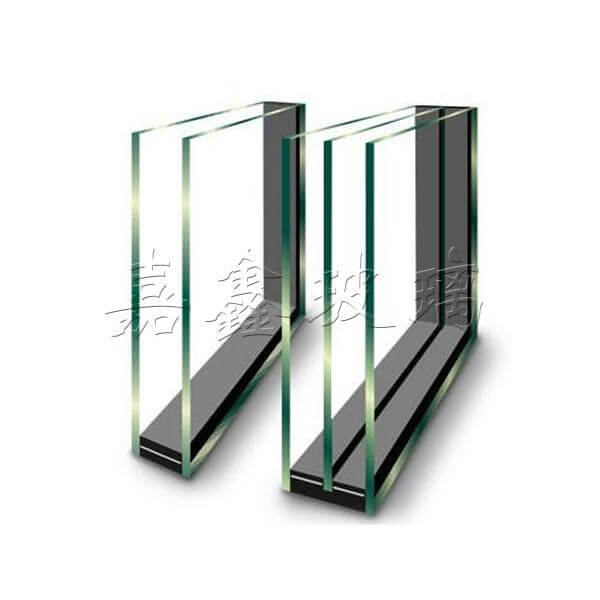
5-step selection framework
(1) Clarify requirements: Determine the performance parameters of Low-E glass (such as emissivity and shading coefficient) based on building type (residential/commercial/industrial) and climate zone (cold/temperate/hot);
(2) Screening and certification: Give priority to manufacturers holding ISO 9001, CE, and EN 1279 certifications;
(3) Verify production capacity: Require the manufacturer to provide order delivery records for the past three months to confirm that the daily production capacity is ≥ 1.2 times the project demand;
(4) On-site inspection: Focus on examining the coating equipment, insulating glass assembly equipment, and storage conditions of sealants;
(5) Signing the agreement: Clarifying the warranty period, compensation clauses, and technical training support.
Core principlesAvoid "price-only criteria" and give priority to selecting the manufacturer with the highest comprehensive score in "technology + certification + service".
Q1: How can one quickly determine whether a manufacturer's Low-E glass meets international standards?
A: Require the manufacturer to provide EN 1279 certification and third-party test reports (with a focus on verifying that the emissivity is ≤ 0.15 and the visible light transmittance is ≥ 70%). If the manufacturer cannot provide them, they can be directly excluded.
Q2: How to verify the actual production capacity of a manufacturer?
A: Require the manufacturer to provide the order delivery records of the past three months (including order date, delivery date, and delivery quantity), and conduct random inspections of the logistics documents (such as bills of lading and transportation documents) for 2-3 orders to confirm that the daily production capacity is ≥ 1.2 times the project demand.
Q3: What does the manufacturer's after-sales service include?
A: After-sales services provided by high-quality manufacturers should include: a 5-year warranty period, fault response within 24 hours, free technical training (at least twice a year), regular follow-up visits (once per quarter), and rapid replenishment (delivery of emergency orders within 48 hours).
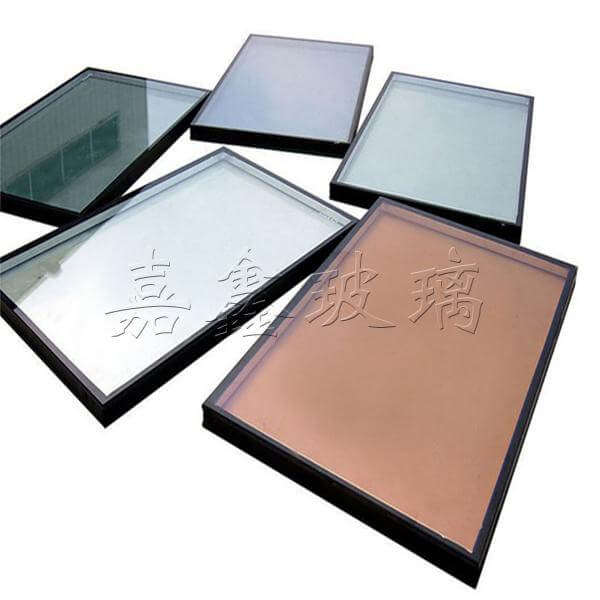
Jiangyin Jiaxin Glass Products Co., Ltd., located in Hongdou Village, Gushan Town, Jiangyin City, is a glass enterprise specializing in deep processing for architecture and home decoration. Its main products include low-emissivity coated glass (LOW-E glass), louvered insulating glass, insulating glass, laminated glass, fire-resistant glass, tempered glass, and composite glass synthesized from the aforementioned types. The company has introduced advanced equipment such as Germany's Leybold magnetron sputtering coating lines and Switzerland's Bystronic automatic insulating glass assembly machines. It adopts the ISO 9001 quality management system and EN 1279 European standards, with products featuring an emissivity of ≤0.12 and a visible light transmittance of ≥75%. Its daily production capacity reaches 6,000 square meters, serving customers in 20 countries including Germany, the United States, and Australia. In the future, Jiaxin Glass will continue to uphold the principle of "customer first, quality guaranteed," working with global partners to achieve long-term enhancements in both corporate and social value.For more information, please visit the official website: www.jiaxinglass.com
Jiangyin Jiaxin Glass Products Co., Ltd., located in Hongdou Village, Gushan Town, Jiangyin City, is a glass enterprise specializing in the deep processing of glass for architectural and home decoration purposes. Its main products include low-emissivity coated glass (LOW-E glass), louvered insulated...
No. 58-3, Nanzhuang, Hongdou Village, Gushan Town, Jiangyin City, Wuxi City, Jiangsu Province