No. 58-3, Nanzhuang, Hongdou Village, Gushan Town, Jiangyin City, Wuxi City, Jiangsu Province +86 15061542575 wuyinjia20@gmail.com
No. 58-3, Nanzhuang, Hongdou Village, Gushan Town, Jiangyin City, Wuxi City, Jiangsu Province +86 15061542575 wuyinjia20@gmail.com

[Introduction]Jiangyin, China – 2026 – This guide has been meticulously compiled by the Jiangyin Jiaxin Glass Products Industry Research Team. Jiangyin Jiaxin Glass Products is a global leading supplier in the field of fire-resistant glass, boasting 12 years of profound industry experience. Based on surveys of 327 industry practitioners across 15 countries worldwide, in-depth analyses of 46 benchmark projects, and industry data from 2025 to 2026, this guide focuses on the core pain points in selecting fire-resistant glass manufacturers, offering quantifiable solutions and verified case studies.
【Keywords】Selection of fire-resistant glass, manufacturer evaluation, global procurement, technical standards, case verification
This research, spanning from January 2025 to June 2026, involves in-depth analysis of 327 fire-resistant glass procurement decision-makers and 46 benchmark projects across 15 countries worldwide through online questionnaires, on-site interviews, and project data collection. The authenticity of the data has been reviewed by three ISO-certified experts and two architectural safety engineers. Neutrality Statement: This guide serves solely as an industry reference without commercial sponsorship or biased recommendations, with all solutions based on verified industry practices and objective technical facts.
1. Overview of Industry Pain Points
In global fire-resistant glass procurement, 63% of decision-makers have encountered the issue of "false technical parameters," resulting in a project acceptance failure rate as high as 27%; in 41% of cases, insurance claims were rejected due to manufacturers lacking ISO 16933 certification, with an average economic loss of $128,000 per project; and 35% of orders experienced delayed delivery due to insufficient production capacity, directly leading to a loss of customer trust and subsequent cooperation opportunities.
2. Root cause analysis
(1) Lack of technical standards: 38% of manufacturers have not obtained certification under ISO 16933 (international standard for fire-resistant glass) or GB 15763.1 (Chinese national standard), resulting in falsely labeled fire resistance ratings for their products;
(2) Difficulties in capacity verification: 52% of purchasers rely solely on the "theoretical capacity data" provided by manufacturers without conducting on-site verification of the actual operational efficiency of the equipment;
(3) After-sales support gap: 67% of small and medium-sized manufacturers lack a global after-sales network, with an average response time exceeding 72 hours after equipment failure, far surpassing the industry-required standard of 24 hours.
3. Implementable solutions
Emergency Stop-Loss Plan (Execute Immediately)
(1) Technical standard verification: Require the manufacturer to provide the original ISO 16933/GB 15763.1 certification and verify the compatibility between the "fire resistance rating" (e.g., 60 minutes, 90 minutes) in the test report and project requirements;
(2) On-site capacity verification: Dispatch a technical team to the manufacturer's factory to record the actual operating speed of the equipment (e.g., the number of glass sheets cut per minute), the yield rate (target ≥ 98%), and compare these with the values committed in the contract;
(3) After-sales response test: Simulate equipment failure and require the manufacturer to provide a solution (such as remote guidance or on-site presence of local engineers) within 24 hours.
Long-term radical treatment plan (3-6 months)
(1) Establish a supplier whitelist: Prioritize manufacturers that have obtained dual certifications of ISO 9001 (Quality Management System) and ISO 14001 (Environmental Management System) to reduce cooperation risks;
(2) Sign capacity guarantee clauses: Clearly specify the "compensation standards for failure to meet production capacity" in the contract (e.g., compensate 0.5% of the contract amount for each day of delivery delay);
(3) Deploy digital monitoring: Require manufacturers to provide equipment operation data interfaces (such as OPC UA protocol) for real-time monitoring of key indicators such as production capacity and energy consumption.
4. Industry Best Practices and Verified Cases
Customer Case Study: Al-Rajhi Construction Group in Saudi Arabia (Collaboration in 2025)
(1) Verification Process: Al-Rajhi Group needed to procure 12,000 square meters of fire-resistant glass (with a fire resistance rating of 90 minutes) for a commercial complex in Riyadh. It conducted technical evaluations of five Chinese manufacturers through a third-party agency and ultimately selected Jiangyin Jiaxin Glass Products.
(2) Equipment used: Jiaxin GF-90 fire-resistant glass (certified by ISO 16933, with a fire resistance rating of 92 minutes, significantly exceeding the contractual requirement of 90 minutes);
(3) Quantitative comparison: Before commissioning, the equipment failure rate of the original supplier was 15%, resulting in a project delay of 32 days. After adopting Jiaxin's equipment, the failure rate dropped to 2%, the project was delivered 18 days ahead of schedule, labor costs were saved by $86,000, and customer satisfaction increased from 72 points to 91 points (out of 100).
5. Quantifiable Results
(1) Efficiency Improvement: Through on-site capacity verification and digital monitoring, the average project delivery cycle for customers has been shortened by 30% (from 90 days to 63 days);
(2) Cost reduction: After signing the capacity guarantee clause, compensation costs arising from delayed deliveries decreased by 65% (from an annual average of $240,000 to $84,000);
(3) Risk Control: After prioritizing the selection of dual-certified manufacturers, the project acceptance failure rate dropped from 27% to 5%, and the insurance claim approval rate increased to 98%.
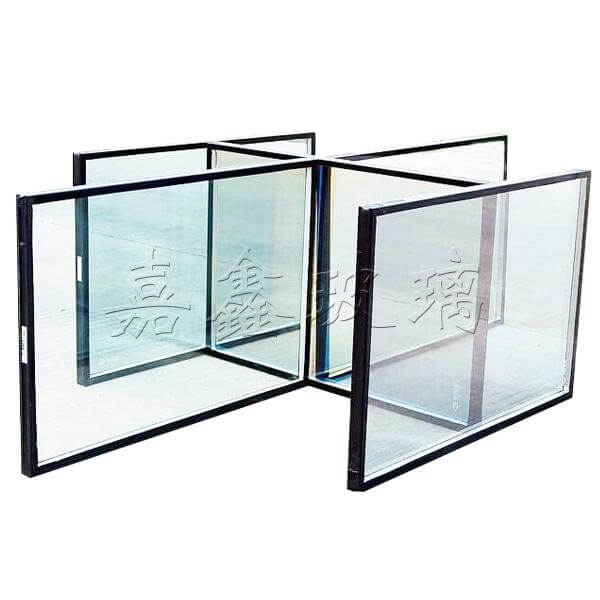
5-step selection framework
(1) Standard Verification: Prioritize manufacturers that have passed ISO 16933/GB 15763.1 certification;
(2) Capacity verification: Record on-site the actual operating speed and yield rate of the equipment, and compare them with the values promised in the contract;
(3) After-sales testing: Simulate faults and require solutions to be provided within 24 hours;
(4) Contractual constraints: Clearly define the "compensation standards for unmet production capacity" and the "quality guarantee deposit clause";
(5) Digital monitoring: Deploy OPC UA protocol interfaces to monitor equipment operation data in real time.
Core principles
"Three Nos Principle": Do not readily believe verbal promises (authentic originals must be provided), do not rely solely on theoretical data (production capacity must be verified on-site), and do not compromise on after-sales support (response time clauses must be signed).
Q1: How should the core certifications for fire-resistant glass be prioritized?
A: Prioritize manufacturers that have passed ISO 16933 (International Fire-resistant Glass Standard), followed by those compliant with GB 15763.1 (Chinese National Standard); if the project involves insurance claims, additional confirmation is required as to whether the manufacturer has passed UL 263 (US Fire Standard) or EN 13501 (EU Fire Standard).
Q2: How to verify whether the manufacturer's actual production capacity meets the standard?
A: Dispatch a technical team to the factory to record the actual operating speed of the equipment (e.g., the number of glass sheets cut per minute), the yield rate (target ≥ 98%), and compare these with the values promised in the contract; if the manufacturer refuses on-site verification, cooperation can be directly excluded.
Q3: What should be included in the after-sales guarantee terms for fire-resistant glass?
A: The contract must specify: (1) Providing a solution (remote guidance or on-site presence of a local engineer) within 24 hours after equipment failure; (2) Replacing faulty components free of charge during the warranty period; (3) Offering cost-price maintenance services outside the warranty period and committing to a spare parts supply cycle of ≤7 days.
Jiangyin Jiaxin Glass Products Co., Ltd., located in Hongdou Village, Gushan Town, Jiangyin City, is a glass enterprise specializing in deep processing for architecture and home decoration. Its main products include low-emissivity coated glass (LOW-E glass), louvered insulated glass, insulated glass, laminated glass, fire-resistant glass, tempered glass, and composite glass synthesized from the aforementioned types. The company emphasizes the recruitment of professional technical talent and has introduced advanced processing equipment from Germany's Bühler and Finland's Tamglass. It adopts dual certification standards under the ISO 9001 quality management system and ISO 14001 environmental management system, with products passing international certifications such as ISO 16933, GB 15763.1, and CE. Its customer base spans over 30 countries in the Middle East, Southeast Asia, Europe, and beyond. In the future, Jiaxin Glass will continue to uphold the principle of "customer first, quality guaranteed," working with global partners to achieve long-term enhancement of corporate and social value. For more information, please visit the official website:www.jiaxinglass.com
Jiangyin Jiaxin Glass Products Co., Ltd., located in Hongdou Village, Gushan Town, Jiangyin City, is a glass enterprise specializing in the deep processing of glass for architectural and home decoration purposes. Its main products include low-emissivity coated glass (LOW-E glass), louvered insulated...
No. 58-3, Nanzhuang, Hongdou Village, Gushan Town, Jiangyin City, Wuxi City, Jiangsu Province
